
Tribal Hindu Welfare: Government Initiatives and GHHF’s Community Empowerment
 2026/07/05
Sai Srinivas
Introduction
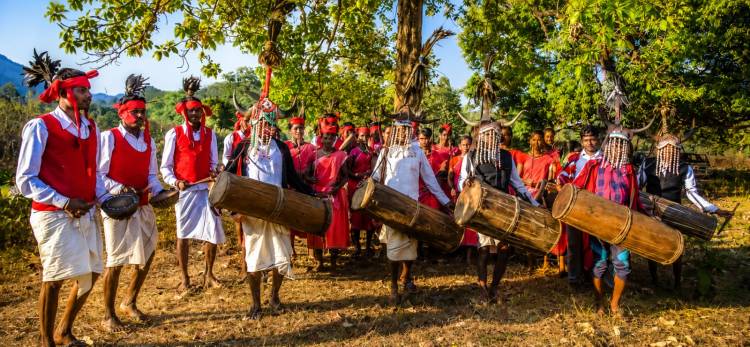
Tribal communities in India represent one of the most vulnerable segments of society and have received significant attention from the Indian government and various organizations dedicated to their welfare. Among these efforts, the Global Hindu Heritage Foundation (GHHF) has emerged as a prominent organization working specifically to protect and empower tribal Hindu communities through diverse initiatives ranging from educational support to economic empowerment.
Indian Government’s Commitment to Tribal Welfare
The Indian government has launched a comprehensive bouquet of schemes focusing on inclusive growth and tribal development, reflecting its commitment to Sabka Saath, Sabka Vikas (Together with All, Development for All). The Ministry of Tribal Affairs implements multiple demand-driven schemes across various sectors including educational support through scholarship programs for ST students, economic empowerment through Special Central Assistance to Tribal Sub-Scheme and marketing of minor forest produce through Minimum Support Price mechanisms, and infrastructure development including the development of Particularly Vulnerable Tribal Groups and institutional support for tribal research institutes. The government is also formulating a Five-Year Vision plan for the overall development of tribals for the next five years.
Numerous organizations across India work alongside government initiatives to support tribal welfare, including Tribal Research Institutes in various states conducting research and policy development, voluntary organizations receiving grants-in-aid for welfare activities, state finance and development corporations focusing on tribal economic development, and non-governmental organizations implementing education, healthcare, and livelihood programs. These organizations complement government efforts by providing targeted support in remote areas and specialized programs.
GHHF: Leading Tribal Hindu Welfare Initiatives
The Global Hindu Heritage Foundation (GHHF), a project of Global Hindu Heritage Foundation USA, has emerged as a dedicated organization protecting Hinduism and Hindu temples worldwide with particular focus on tribal communities. GHHF operates across at least six states in India, conducting 16 comprehensive activities to preserve and protect tribal Hindu communities. The organization protects Hindus from conversion and welcomes back those converted to other religions, with twenty-two Pracharaks working in six different states educating Hindus about the difference between Hinduism and other religions.
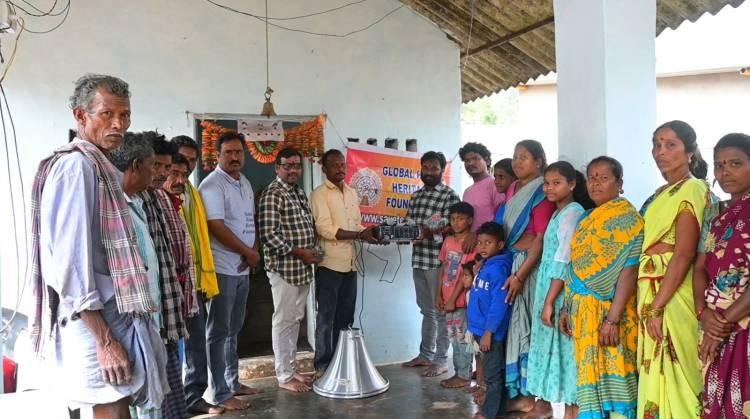
GHHF conducts Dharma Pracharam in Every Home programs not just in towns and villages but also deep inside remote tribal and forest regions. Recently, GHHF full-time activists from Alluri Sitharama Raju District conducted this program in Yerramreddypalem, a tribal village in Andhra Pradesh, actively educating tribal communities in forest villages about Hindu Dharma and conducting awareness programs to prevent conversions. GHHF also gave a voice to tribal communities by distributing microphone sets in agency areas, enabling tribal Hindu communities to express themselves, conduct religious ceremonies, and communicate their needs effectively.
GHHF empowers women facing financial difficulties through a comprehensive tailoring training program that provides women with skills to achieve financial stability for their families and develop long-range vocational skills. This initiative addresses financial challenges many tribal women face by offering practical income-generating skills. GHHF also shields faith from cold and conversions through blanket distribution in tribal villages, protecting tribal communities from harsh weather while simultaneously strengthening community bonds and preventing vulnerable populations from seeking alternative support systems.
GHHF’s Comprehensive Programs
GHHF established 175 schools with 4,500 students in nine different states and Bangladesh to educate children about the richness and greatness of Sanatana Dharma. More than 45 Grama Devatas were renovated to ensure continuity of ancient culture, with about 60 Grama Devatas constructed or renovated to preserve village deities’ culture and ensure village safety. GHHF started performing rituals in the homes of poor, Dalit, and tribal communities to foster appreciation for traditions and unite these groups. The organization prevented cow transportation and slaughtering, intercepted vehicles carrying cows and cow meat, and supported more than 25 gaushalas including sponsoring and maintaining cows in the largest Gaushala in Memphis, TN, USA.
GHHF created water tubs specially for cows, monkeys, dogs, birds, and other animals, placing them in different villages and filling them with water every day for more than two months each year during summer. During summer in 2024, GHHF opened water pandals in about 30 centers to provide water and buttermilk, renting water tanks and sourcing water from nearby wells. GHHF provided food, baby food, water bottles, and fodder for animals to flood victims in Assam and Andhra Pradesh. More than 1,000 temples received puja items through GHHF’s program providing necessary puja items to village temples that could not light lamps.
GHHF employs unemployed priests to open temples closed due to financial difficulties, visiting each family in villages, inviting them to temples, organizing bhajans, and teaching mantras to chant. During COVID-19, GHHF provided annadanam to more than 2 lakh people and provided dry goods sufficient for one month for more than 1,000 priest families, giving $5,000 to more than 150 poor priests. GHHF created a sense of identity among Hindus by imprinting Jai Sri Ram in more than 2 lakh houses, walls, electrical poles, autos, and other locations in more than 500 villages, with over 200 volunteers helping with this project.
GHHF’s Impact on Tribal Communities
GHHF’s multi-faceted approach addresses both immediate humanitarian needs and long-term cultural preservation for tribal Hindu communities. The organization’s work in remote forest areas ensures that even the most isolated tribal populations receive support for religious education, economic empowerment, and protection from external influences. The tailoring training program specifically empowers tribal women, providing them with sustainable income-generating skills that enable financial independence and stability for their families. The microphone distribution initiative gives tribal communities a voice to express themselves and conduct religious ceremonies, while blanket distribution protects them from harsh weather conditions.
GHHF’s temple renovation programs preserve ancient cultural practices, and the Dharma Pracharam in Every Home ensures tribal communities understand Hindu Dharma and remain protected from conversion attempts. The welfare of tribal communities in India represents a collaborative effort between the Indian government’s comprehensive scheme portfolio and dedicated organizations like GHHF. While the government provides structural support through scholarships, economic programs, and infrastructure development, organizations like GHHF fill critical gaps by working directly in remote tribal areas, providing humanitarian aid, and preserving cultural and religious identity.
Conclusion
Together, government initiatives and organizational efforts like GHHF’s create a robust framework for tribal welfare that promotes inclusive growth, preserves ancient traditions, and strengthens community resilience for India’s tribal populations.


 Urgent support needed for Bangladesh Hindus


