
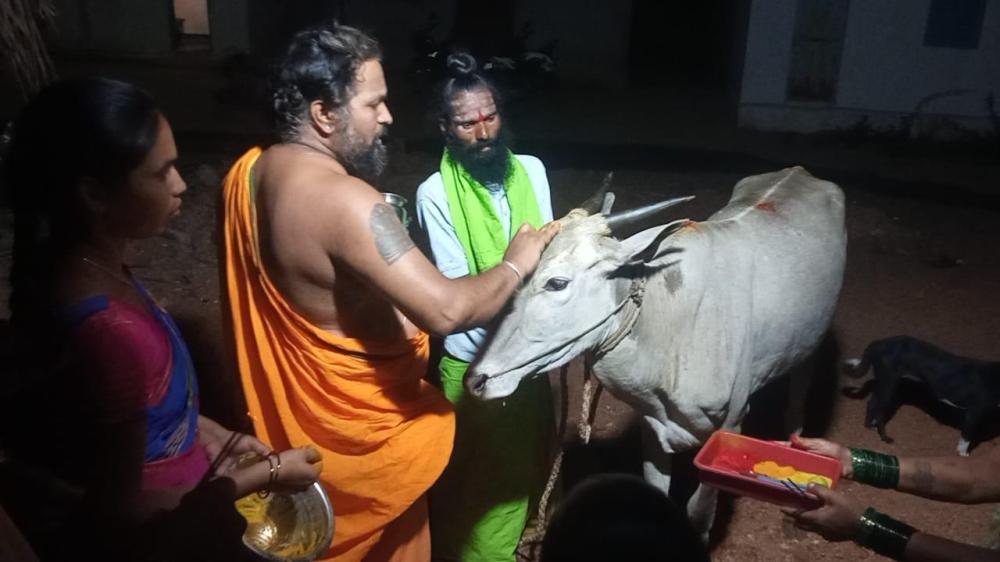
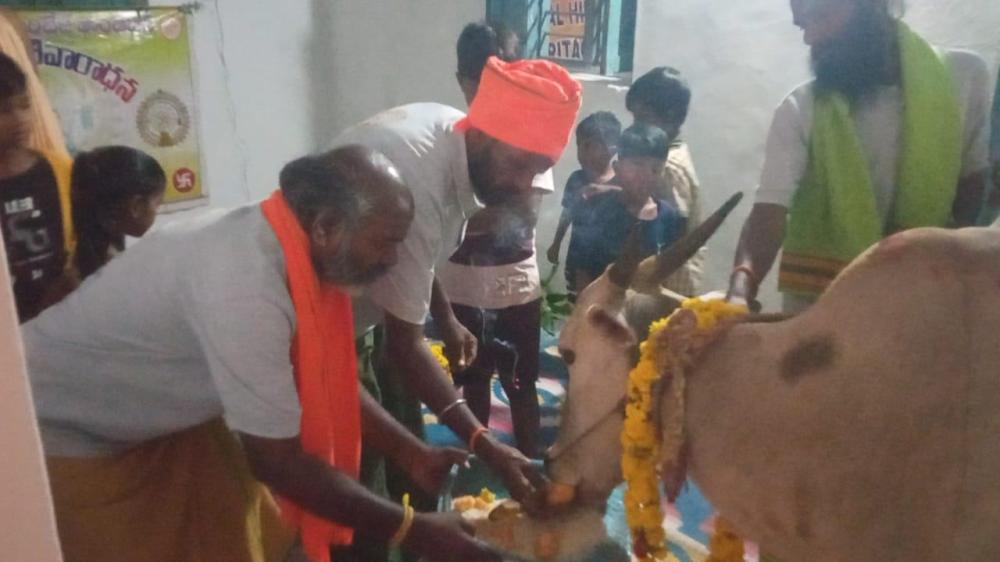
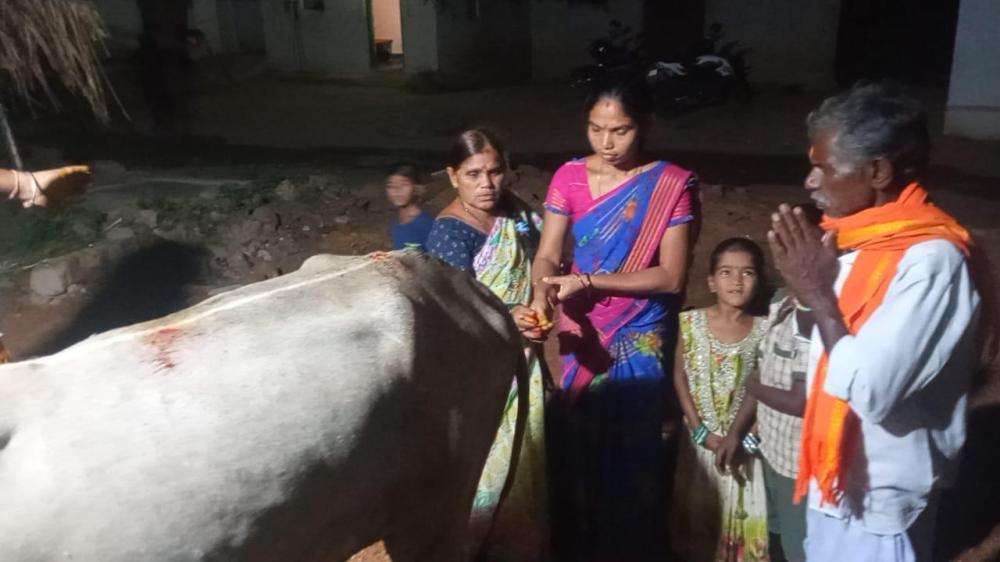
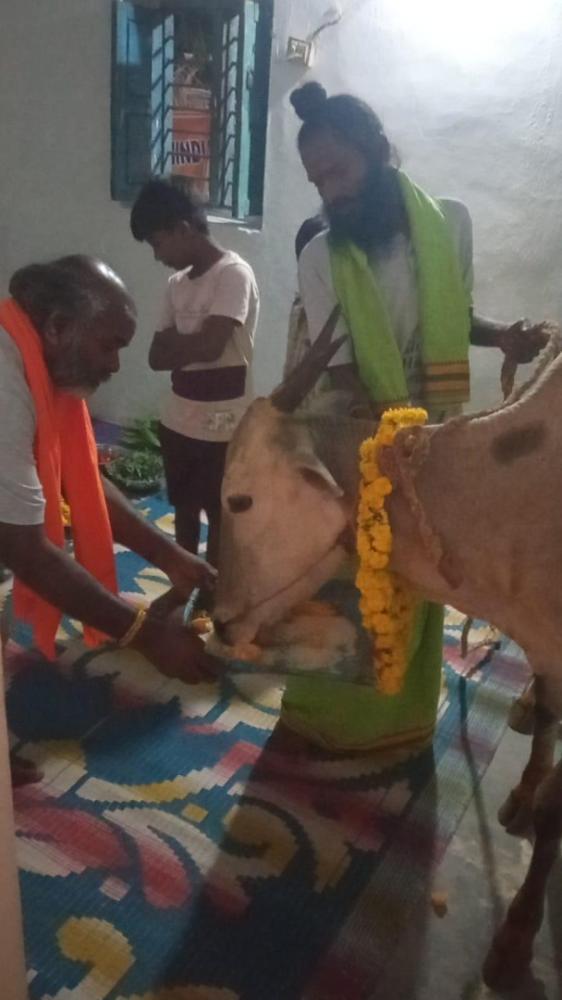
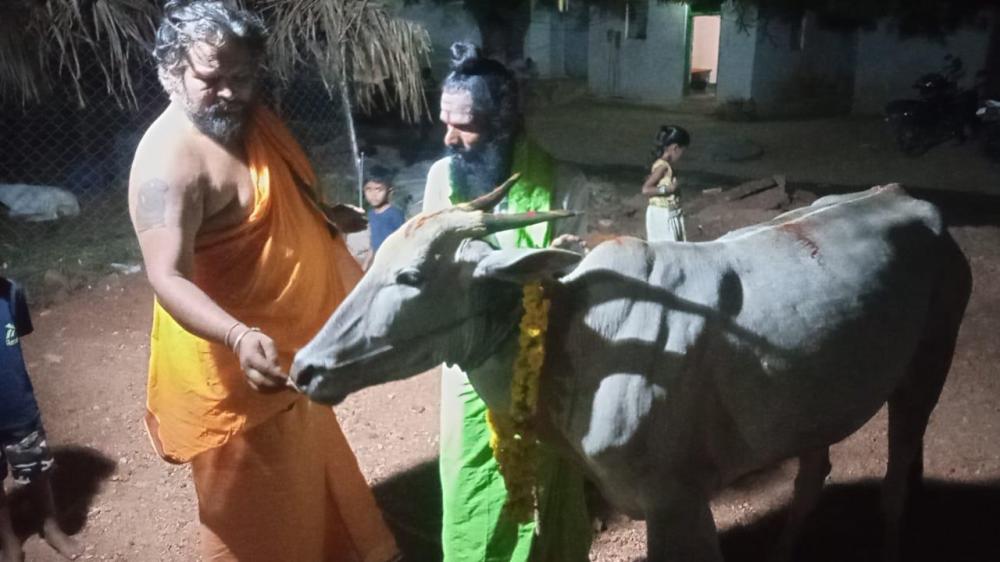
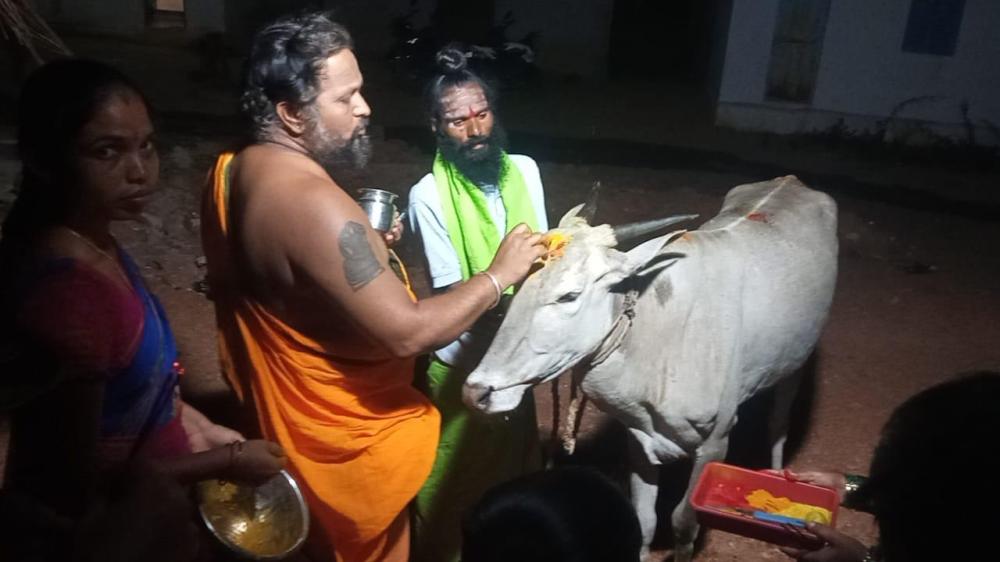
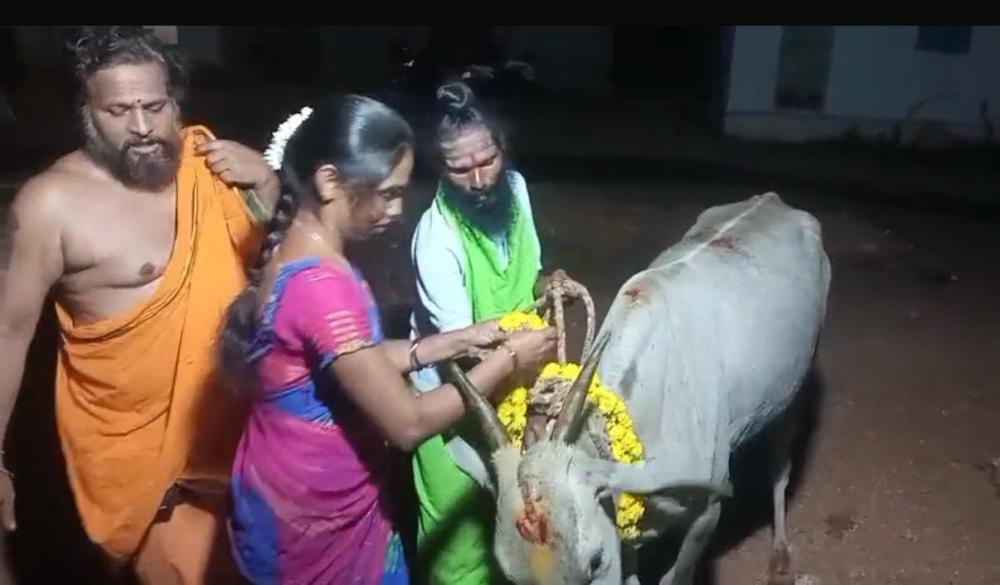
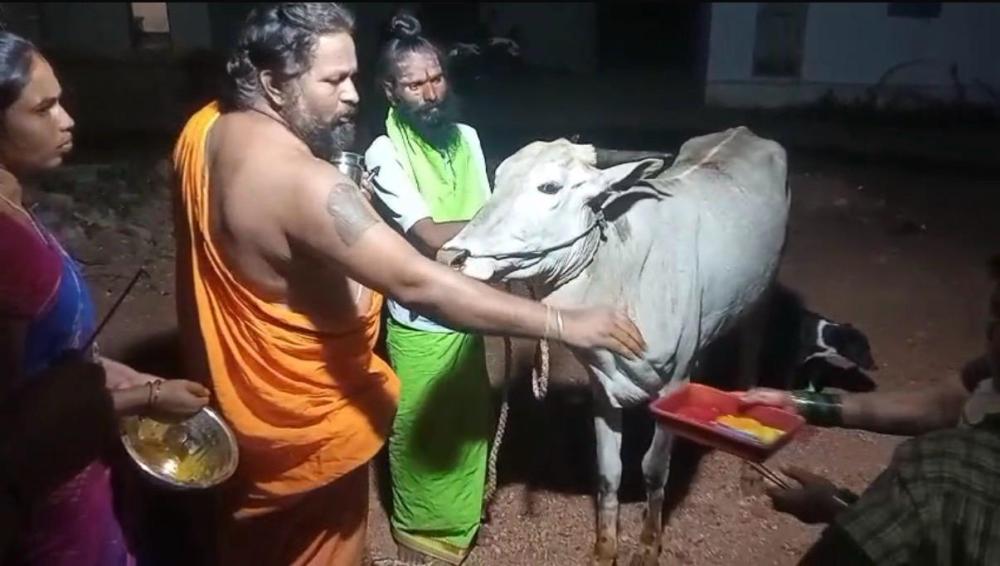
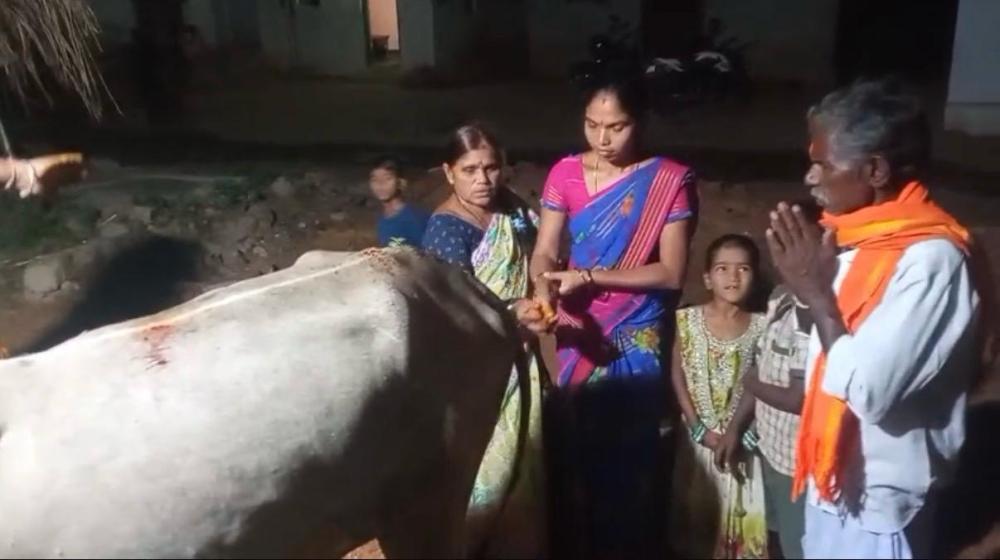
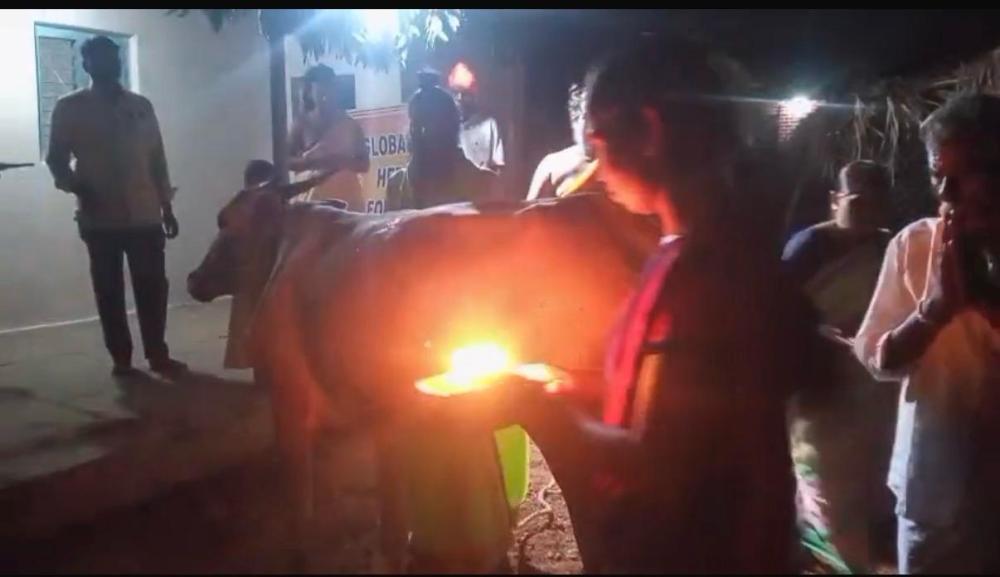
[GHHF] Performed Puja to Gaumata, who gives life-sustaining Panchagavyas and provides prosperity, mental peace, ecological balance, and bumper crops.
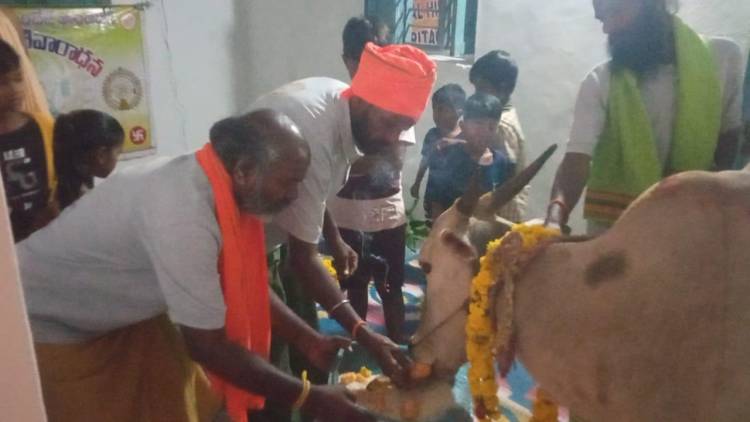 Global Hindu Heritage Foundation works on the ground in remote villages, hilly areas, tribal areas, and Dalit communities to help people participate in rituals known for bringing peace of mind and granting wishes. As many of us know, many group activities and temple rituals are done for Loka Kalyanam (universal welfare). Over the years, secular concepts have swept through many Hindus, whereby they have neglected spiritual and religious obligations. GHHF intends to revive these pujas, Homas, and Abhishekams to revitalize villages and give people opportunities to participate in these rituals, irrespective of caste or creed.
GHHF would like to thank Nagabhushanam, who lives in a Dalit Wada in Garudapuram village, Kalyandurg Mandal, and Anantapur District, Andhra Pradesh. He requested GHHF to organize “Intinta Shiva Kalyanam,” inviting more than 75 people from the community. This kind of event brings community members together, creating more unity and harmony.
Why is Gau Puja Important?
Cows are a manifestation of the Mother Goddess. They are affectionately called Gau Mata. Just as a mother nourishes her child, the cow provides life-sustaining milk to all living creatures, giving selflessly without asking for anything in return.
The cow holds a very high sacred status, symbolizing life, selflessness, and spiritual grace. Rather than being worshipped as a deity itself, the cow is revered as a sacred symbol of nature's generosity and the earth's nurturing qualities. Hindus believe the cow is a sacred animal that provides life-sustaining milk. This milk is considered divine prasadam, or a holy offering, and on select festivals, Hindus decorate and worship her.
As per the legend, during Samudra Manthan, “Many gems, animals, and gods emerged from the ocean churning, which took place between Gods and Demons. Kamadhenu, the divine cow, also emerged during the ocean churning and can fulfill every desire. Once Kamadhenu reached Sage Vasishta's ashram. King Dilipan was childless. Hence, sage Vasishta advised him to worship Kamadhenu to obtain a child. The king began worshipping Kamadhenu and was blessed with a child. Kamadhenu also helped sage Vashista in building up an army to fight a battle against Vishwamitra, who wanted to take away Kamadhenu.”
Gau puja represents the worship of Goddess Kamadhenu, the Gomata. She fulfills all your wishes. Performing Gou Pooja can remove negativity and bestow wealth, happiness, and prosperity in life. Cows help to remove poverty by giving health, wealth, and comfort. Worshipping a cow may remove the deadliest sins. Worshipping cows helps to repay debts and to overcome enemies.
33 crore deities reside in cows
It is believed that the cow originated during the churning of the ocean, and 33 crore deities reside in the cow. By worshiping them, God becomes pleased and bestows blessings. As a result, problems are eliminated, and if someone is sick or unwell, their health improves. By the grace of Mother Cow, one gets financial benefits, and wealth increases.
Nearly 36 deities have taken abode in the body of a cow; hence, it is a sin to harm it. The base of cow horns is an abode of Lord Brahma and Lord Vishnu. Lord Shiva resides in the forehead, and Goddess Uma resides in the middle of the forehead. The nose is an abode of Lord Ganesh, and the nose tip is the abode of Murugan. Lord Yama resides in the heart; the holy river Yamuna resides in cow dung, while Goddess Lakshmi resides at the hind part of the cow. The sages, rishis, reside in the hair of the cow, and other gods reside at the base of the tail.
According to the Bhavishya Purana, the cow is the form of Lakshmi. Sun and Moon reside in the eyes of the cow, Rudra in the mouth, Vishnu in the neck, all the gods and goddesses in the middle of the body, and Brahma resides in the back part. Therefore, all the gods and goddesses, including Goddess Lakshmi, are pleased by the worship of the cow and its calf.
It is believed that if a cow is worshiped and served as per the rituals on Gopashtami, one receives the blessings of the Gods and Goddesses. By worshiping the cow, Shri Krishna becomes happy and showers blessings on his devotees. Worshiping the cow on Gopashtami brings happiness, prosperity, and peace in the house. On Gopashtami, along with worshiping Mother Cow and Girdhar, one should also read the story. This results in virtue.
Krishna and Cows
Bhagavata Purana, you will read that the Cows and Krishna have always been together. Krishna is a cowherd boy in the agricultural community of Goloka. Lord Krishna is considered a Gopala, meaning protector of cows. In Vrindavan, Krishna spent His days herding cows through forests and meadows, playing His flute, and calling each cow by name. Krishna is known to remember each cow's name in the herd. He knew their moods, happiness, and personalities.
In the Bhagavad Purana, it is described that “When Krishna plays His flute, the cows stand still, their ears raised, and they drink the nectar of the flute song through their ears, as if they are calves drinking milk from their mothers.”
Krishna used to spend His childhood tending cows and calves while playing in the pasturing grounds with His friends. His example shows the importance of cows to human society, the practical benefits of caring for them, and the advantages of an agrarian economy based on cooperation between man and cows.
Gau-seva, meaning service to cows, is considered the most auspicious form of devotion to cows. Caring for cows by providing fodder, feeding them, touching them, brushing them, massaging them, and maintaining gaushalas is considered the utmost expression of love, gratitude, and compassion.
Your donations are appreciated.
By Zelle: ghhfusaorg@gmail.com
PayPal: savetemples.org
By Check: GHHF, 14726 Harmony Lane, Frisco, TX 75035.
Call 601-918-7111; +91 83096 43979


 Urgent support needed for Bangladesh Hindus


