
[DJF & GHHF] 2nd Day of Ramayana Leadership Workshop coupled with a talk on temple customs, AI presentation, and Bhagavad Gita.
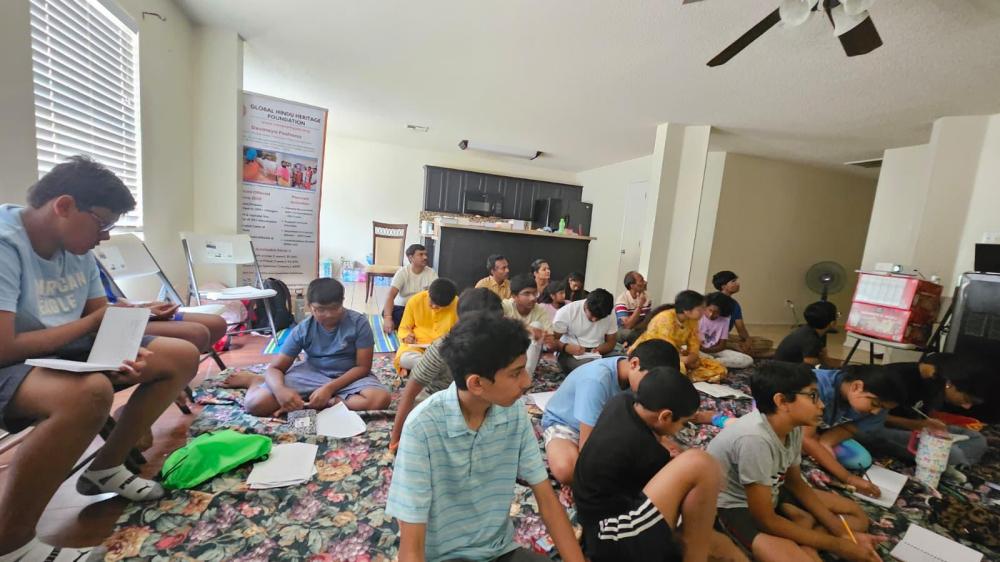
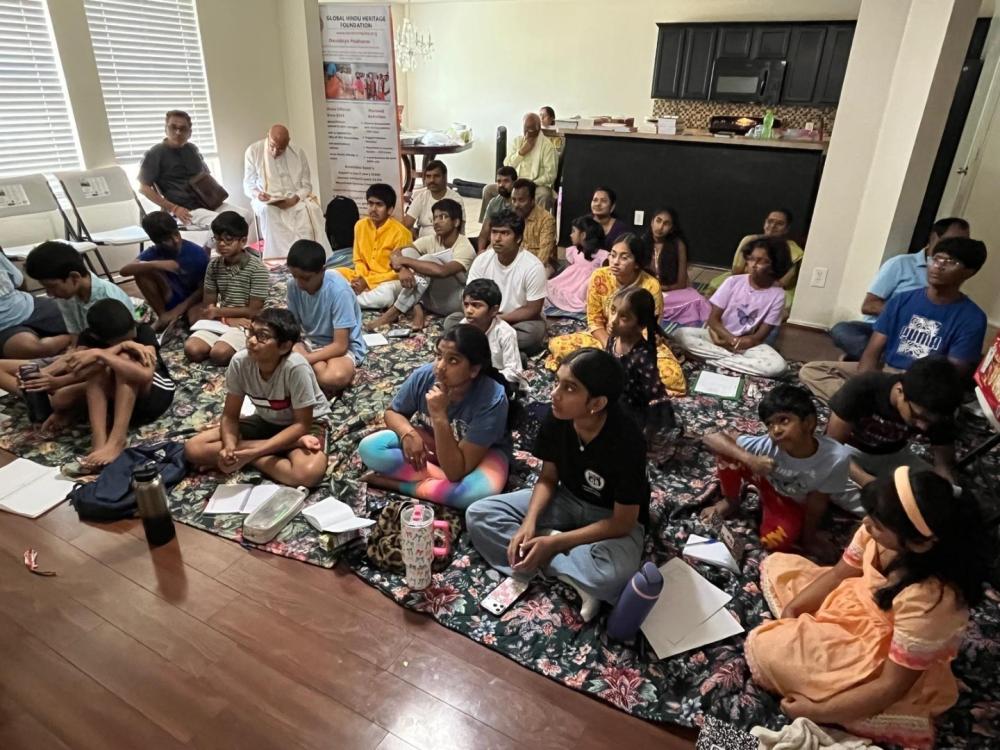
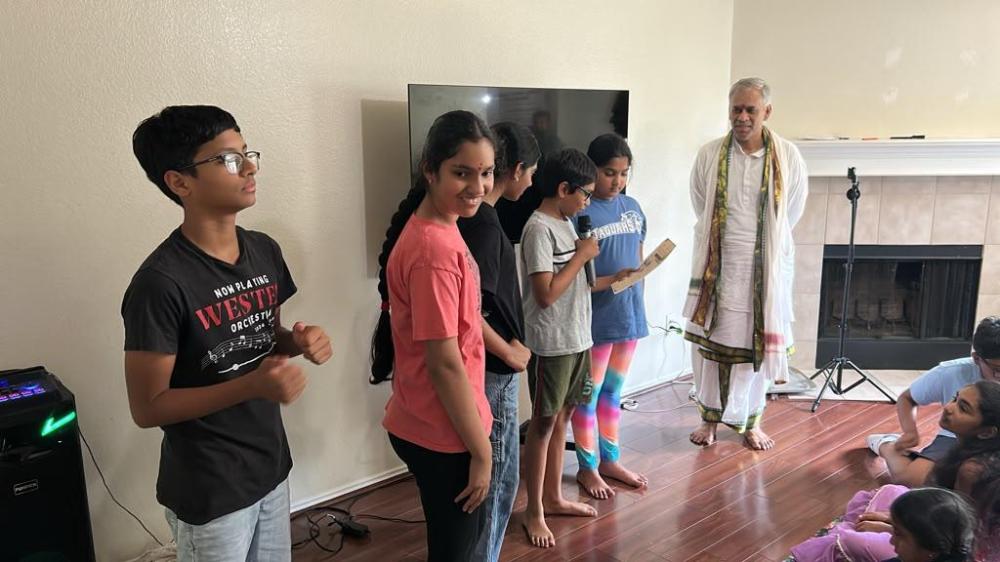
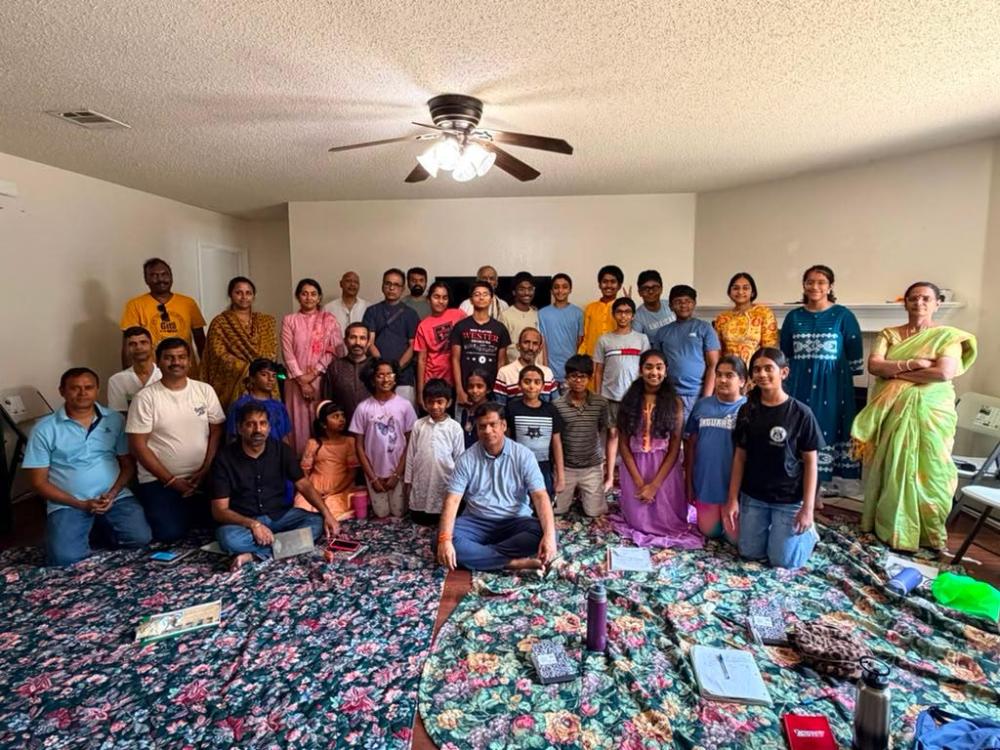
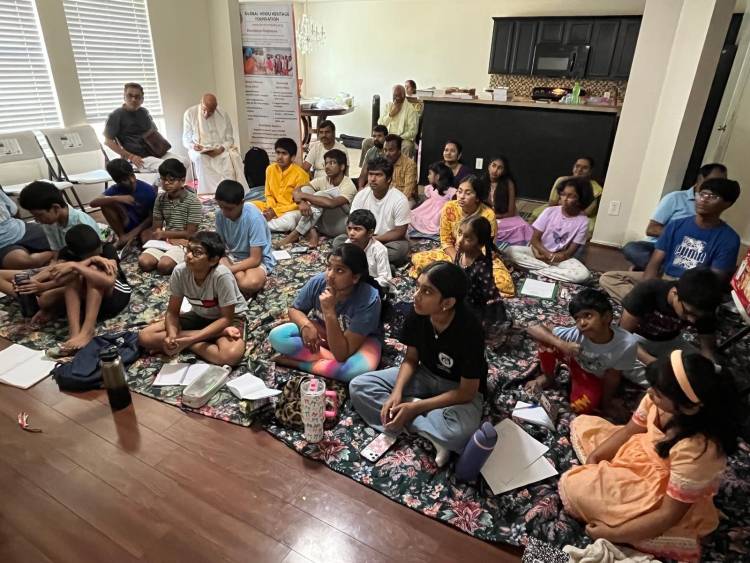 Dharma Jagruti Foundation and Global Hindu Heritage Foundation are conducting the Ramayana Leadership Workshop for our youth in Frisco, Texas, over three days, July 17 through July 19. About 34 youth are enrolled in the workshop.
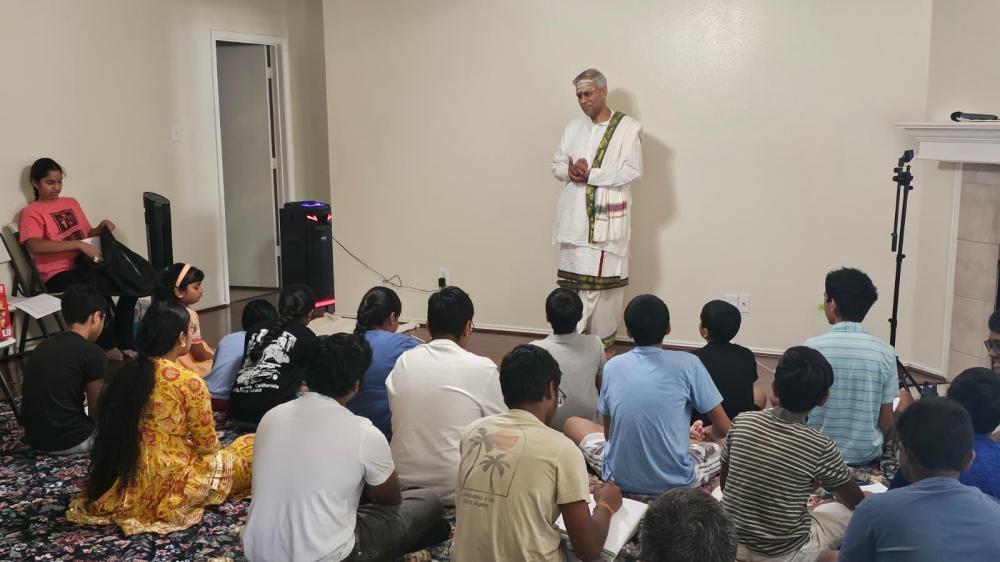
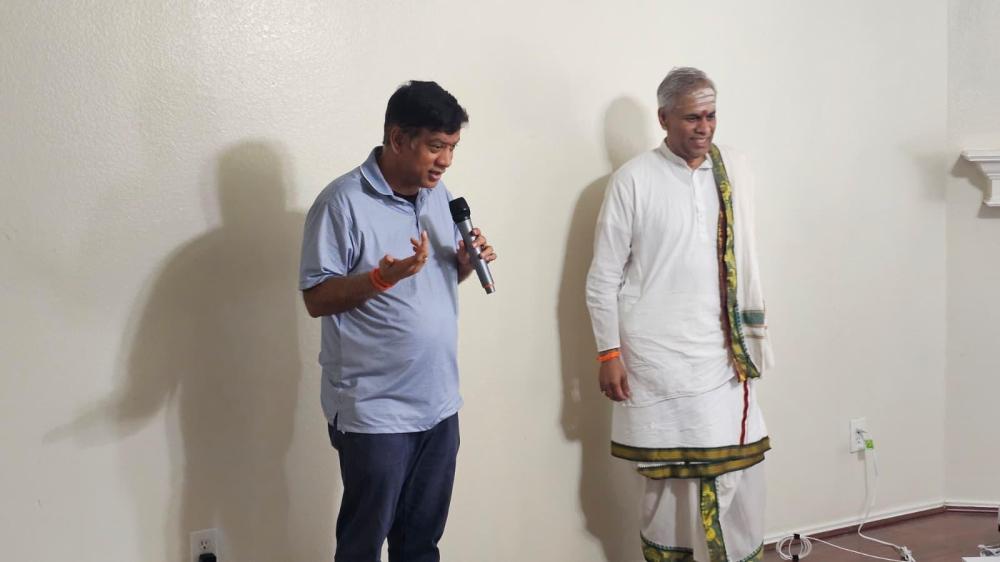
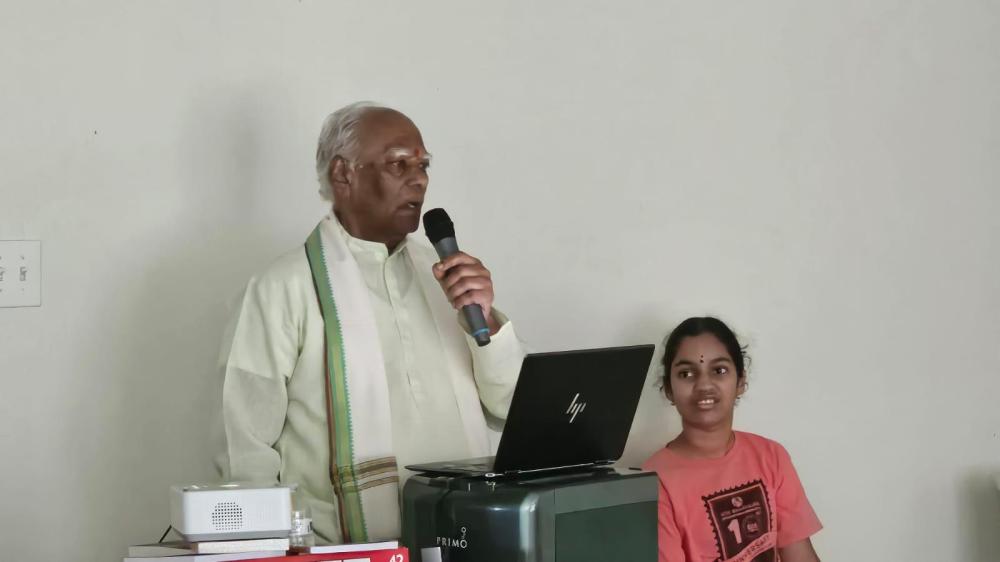
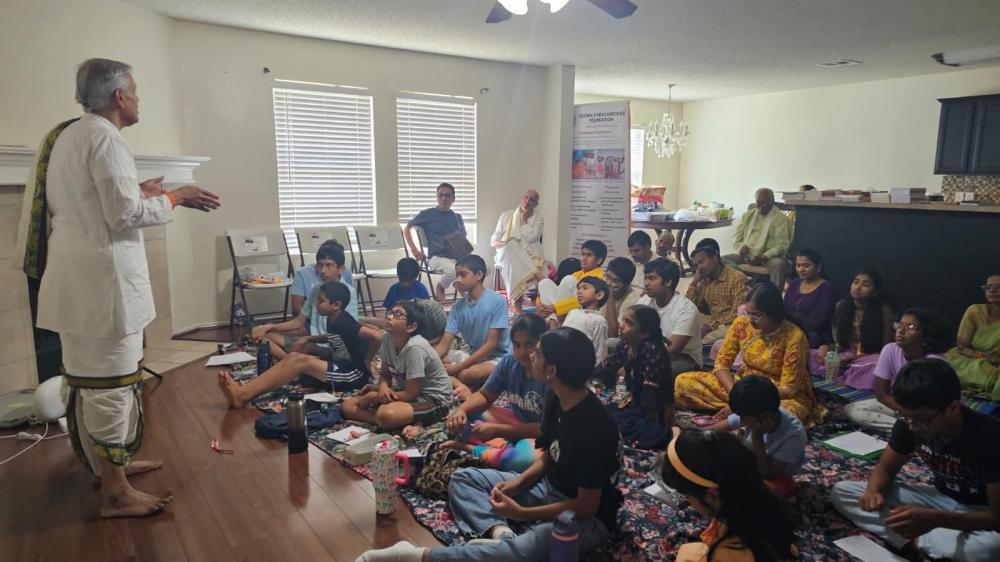
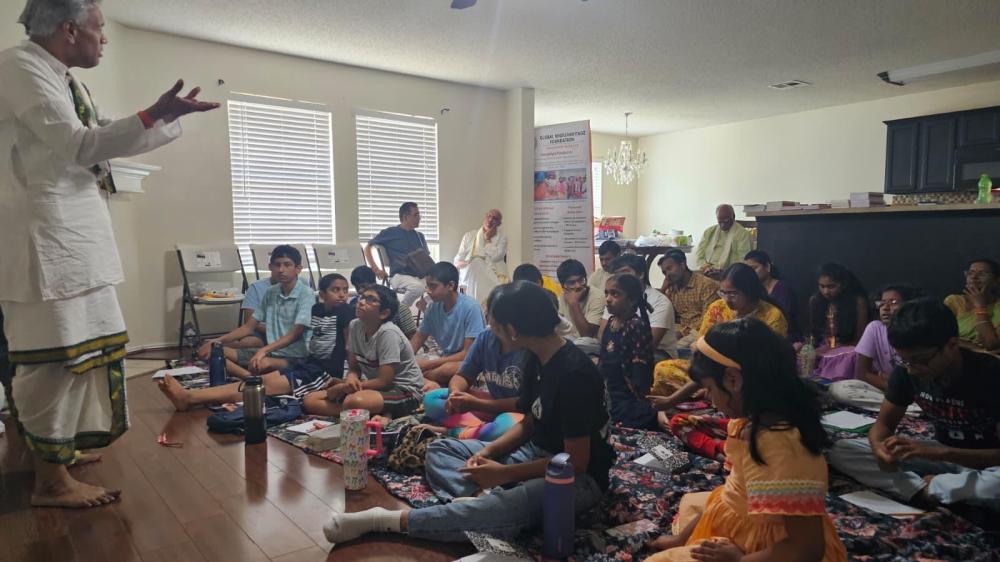
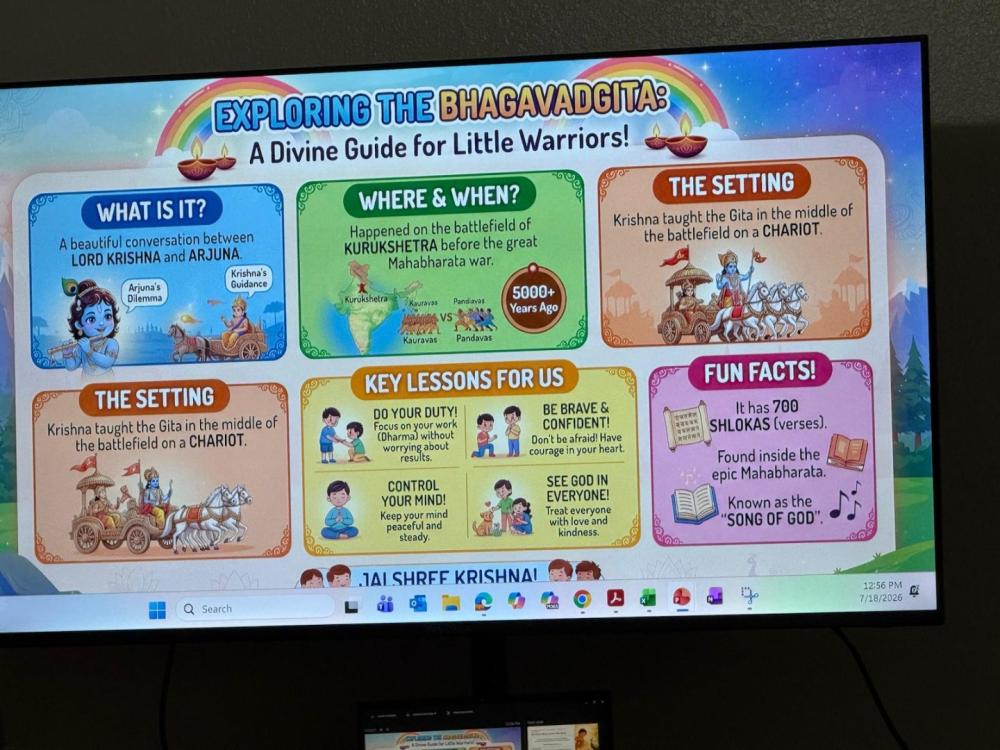
On the 2nd Day, Sri Sairam Poguluru discussed several profiles from the Ramayana. Prakasarao Velagapudi discussed the science behind Hindu Temple customs; Kumar Gauraw spoke about the applications of AI; and Devendra Prasad discussed the Bhagavad Gita.
The summary of Sri Sairam Poguluru and Devendra Prasad's presentation will be presented soon.
Dr. Prakasarao Velagapudi discussed the science behind the customs we observe in a Hindu Temple.
Naivedyam/Prasadam: Lord Krishna tells Arjuna in the Bhagavad-Gita (9.26), “If one offers Me with love and devotion a leaf, a flower, a fruit or water, I will accept it.” If there is no love and devotion behind the offering, the magnitude of the offering is not important to Him.
Types of Naivedyam: Naivedyam can take different forms depending on the occasion, deity, and region. Some common types of Naivedyam include fruits, eatables, and food items such as curd rice, Pongal, lemon rice, milk rice, sweet Pongal, payasam, and ghee rice.
"Does God eat the food that is offered? If He does, why has the vessel not been emptied?" A child may ask a teacher, "Does God eat the offering we made? Why didn't he finish the food? “
The teacher asked the children to read the title of the book, "Narendra Modi: The Pride of Bharat." And read it and remembered the title. Then the teacher asked them to say what they read. They remembered the title. The teacher said that the book is still with me. How can you say you got it? Then he began discussing the difference between the gross and subtle states. Without eating in physical form, God can look at it and take the essence of the prasadam without changing the prasadam vessel.
Super Brain Yoga: Dr. Prakasarao Velagapudi explains the origins of Super Brain Yoga, the Puranic stories related to it, how it is practiced, its health and physical benefits, and the voluminous research conducted in the USA and India. Super Brain Yoga is performed by holding the left ear with the right-hand fingers and the right ear with the left-hand fingers and simultaneously sitting and standing in front of Lord Ganesha and seeking his blessings.
Two stories are narrated in our Puranas with the practice of Super Brain Yoga. Many Hindus do this Super Brain Yoga in front of Lord Ganesha, who is known for intelligence and knowledge. Proper holding of the earlobes, the major acupuncture point, stimulates the mouth, eyes, temples, testes, ovaries, forehead, and brain. The research conducted to find out the benefits revealed that the students who practiced this technique have fewer symptoms of autism, dyslexia, ADD (attention deficit disorder), ADHD (attention deficit hyperactivity disorder), Down syndrome, and show fewer emotional disturbances. Other benefits include improved sex drive, lower psychological stress, mental clarity and focus, increased creativity and intelligence, and greater calmness and inner peace, which can further aid in appetite control and overall health management.
Many Universities in India and the USA have conducted research on high school students, which has found that they experienced less frustration, improved class participation, reduced anxiety and fear, improved standardized test scores, and increased peer interaction. They also showed more compassion, kindness, and generosity.
Pradakshina: Pradakshina is going around or circumambulating the deity in the Garbha Gudi with devotion and folded hands. The circumference of a circle is equidistant from the center. This means that wherever we may be or whoever we may be, we are equally close to the Lord. His grace flows towards us without partiality. Pra means toward, onward, forward; Dakshina means south.
The Pradakshina is always performed clockwise, but do we know why? This is because we always believe that God exists in the center of the universe. He is the center of our very existence. He is Omnipresent. So, when we do pradakshina in a clockwise direction, we believe that all our actions and thoughts are centered on God, the universal power of the world. The center point always remains fixed, no matter what distance we perform the pradakshina.
Sri Kumar Gauraw
He discussed the usefulness and practical applications of AI. This is his summary of the presentation. During the interactive session, we explored how AI can serve as a powerful collaborative partner for creative problem-solving and entrepreneurship. To demonstrate what is truly possible, I shared live demos of advanced applications, including a real-time voice-controlled "Jarvis" assistant that operates my computer and an autonomous agent capable of writing and publishing a flawless, 10,000-word blog post from a single prompt. We also dove into visual storytelling, giving the kids a hands-on introduction to generative image and video tools like Higgsfield AI and Google Flow.
Beyond the technical demos, we discussed practical ways these young innovators can apply their new skills to design flyers for community events, assist their parents with business tasks, and create compelling visual assets to support the Global Hindu Heritage Foundation (GHHF).
To put their learning into action, we launched an exciting contest! The students are currently challenged to produce an original AI video using Google Flow that summarizes their lessons from recent Bhagavad Gita or Ramayana sessions. Submissions close Sunday night, and we will announce our three prize winners on Monday. Stay tuned to see their amazing creations!
Your donations are appreciated;
By Zelle: ghhfusaorg@gmail.com
PayPal: savetemples.org
By Check: GHHF, 14726 Harmony Lane, Frisco, TX 75035.
By Rupees: call 601-918-7111; +91 83096 43979


 Urgent support needed for Bangladesh Hindus


