
[GHHF] Science behind Hindu Customs and traditions – Murti Worship, Multiplicity Gods, Teerdham and Does God eat Prasadam – Part 2.
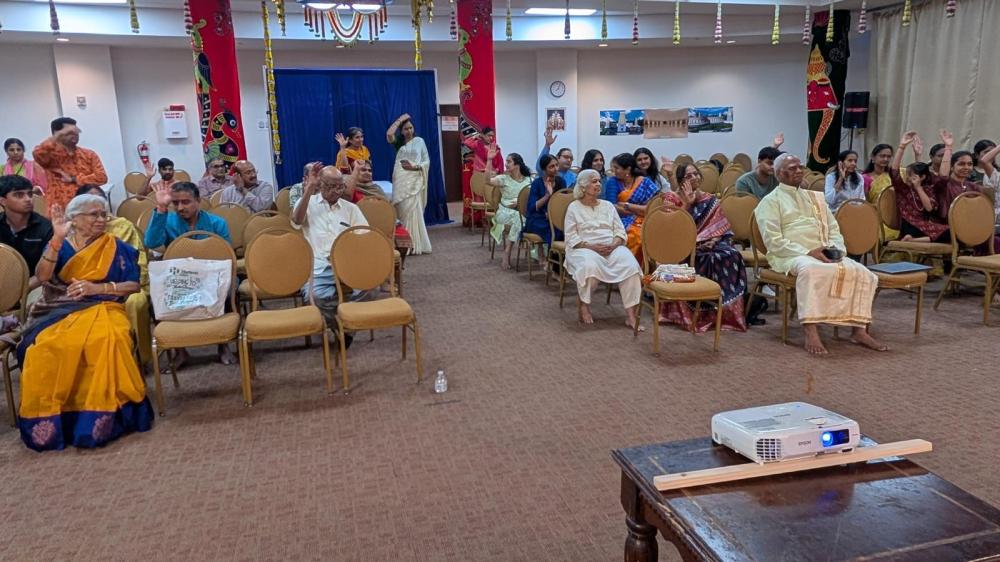
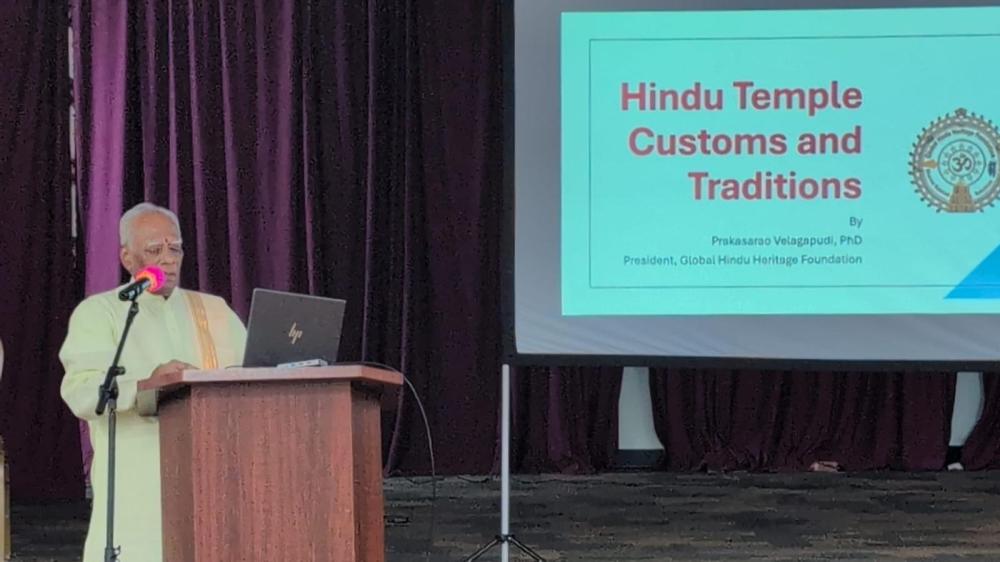
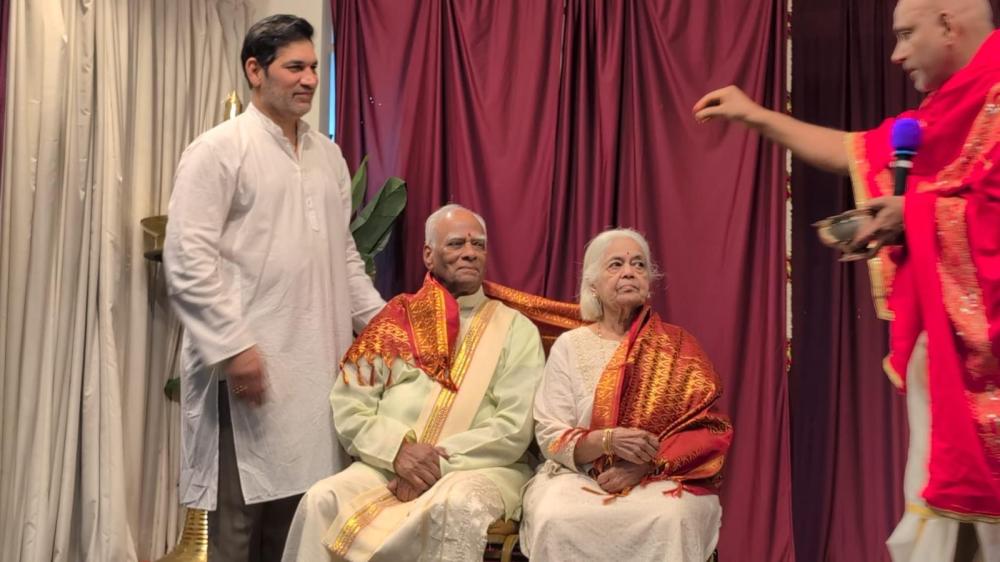
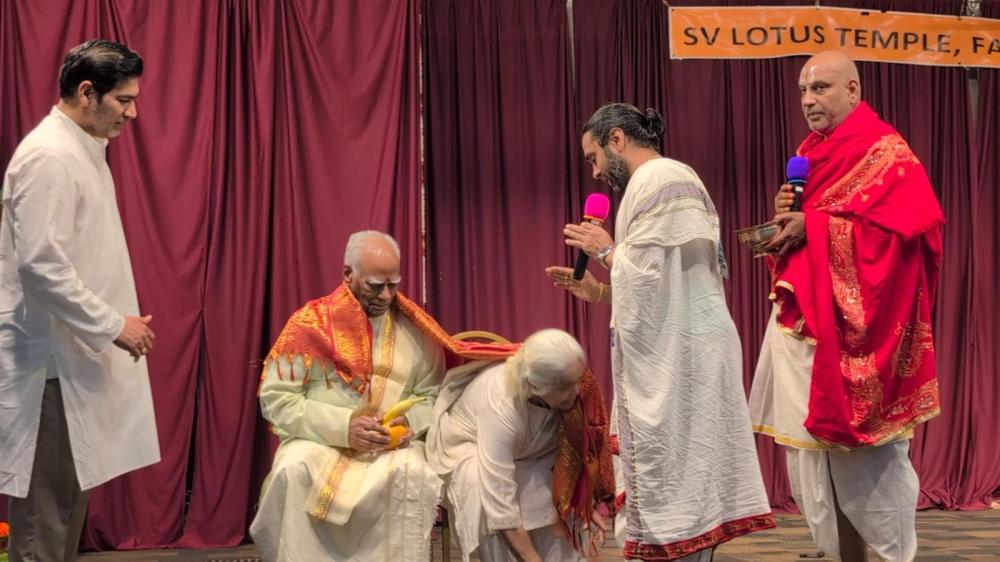
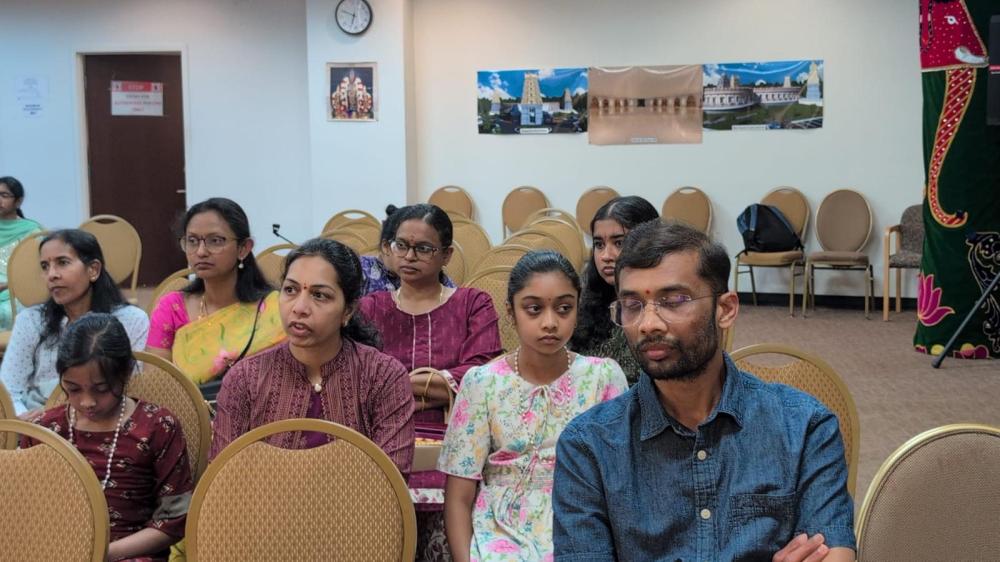
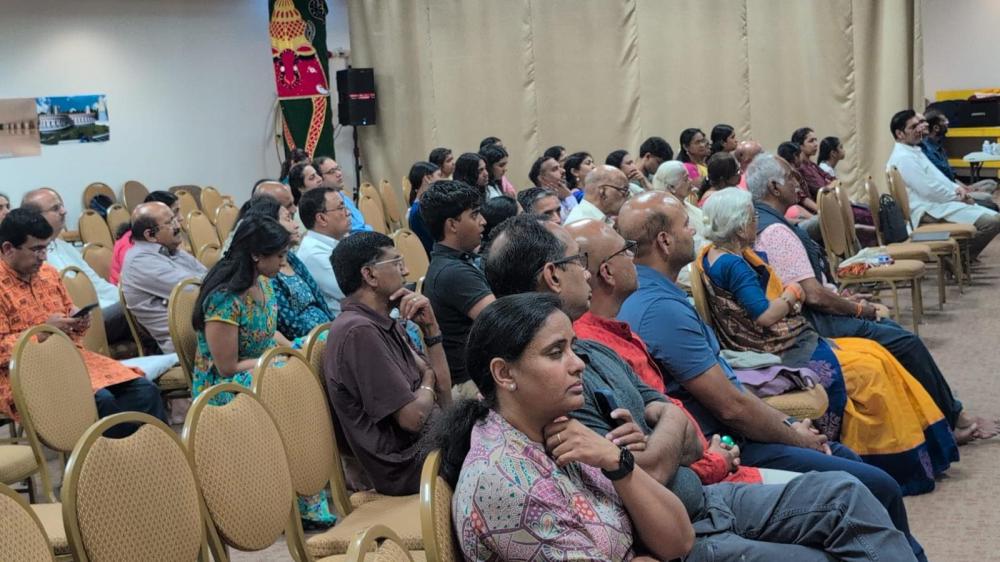
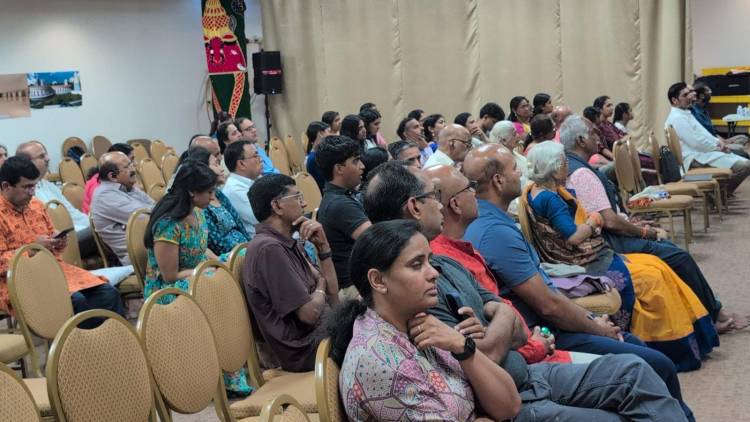 This is the second part of my presentation at S V Lotus Temple in Fairfax VA on August 8, 2026. First part was published on August
How do we know God Eats our Prasadam. We do not see any evidence of taking food we offer. We do not see any evidence of food being eaten. No amount of food is decreased. Do not appear that it was even touched by him.
He takes the subtle essence of the food. The prasad of the Lord is very sacred and purifying. If it is taken with faith and devotion, it brings miraculous results to the devotee.
Take for example, we a piece of paper written something on it. May be three lines or four lines, etc.
Suppose we give that piece of paper to somebody and ask him to read and find out what is written. He reads what is written may be one or two times and give it back that paper.
Then we can ask him what is the essence of what he read. He will mentions about what is written.
The we can say, how can you say you know what is written on the piece paper, while that piece paper still has what was written. What was written is stiil on the paper. How can you say you have in your mind/ brain what is written on the paper?
Theertham
It means holy/sacred water offered or associated with a deity. When ingredients like cloves, cardamom and edible camphor is mixed with water and used in the Pooja of a deity for Padyam, Aarghyam and Achamanam, it becomes Theertham. This water becomes pure, sacred and holy after it touches Lord’s legs, hands, mouth and whole body.
According to one's samskara Balam (strength of character), he relates himself to God like father/mother, son/daughter, guru or friend. Anything offered to God has significance in its own way. Abhishekam is one of the known easiest ways to please Him or care for Him.
(1) Theertham has become holy since it has touched the body of the god while holy mantras are being chanted. It can also be seen as one of the mediums to receive divine positive energy.
(2) Theertham is a (herbal) medical composition for health benefits
(3) Theertham is special because of the purpose of Abhishekam like for health, wealth, peace of mind, removal of sins; different liquids like coconut water, milk, honey, and rose water are used.
We should note that the right palm is like a cow’s ear. The amount of water for consumption should be equal to the quantity of water just to immerse a black gram.
Water, Herbs, copper vessel, and Chanting Mantras are used in preparing Theertham.
Murti/Idol worship
In Hinduism, the practice of worshipping images or idols—commonly referred to as Murti Puja—is a core aspect of devotion. Hindus believe in one Supreme Power (Brahman) and believe in the manifestation of multiplicity of gods and goddesses. According to our scriptures the number would run into 330 million gods and goddesses. In fact, these manifestations can be infinite. The proper analogy is Sun and the infinite number of rays. It is difficult to experience the sun and also difficult to look at the sun directly. But we can experience its rays. For all these infinite rays there is only one source that is sun. Similarly, all these multiplicities of the Gods and Goddesses of Hinduism are merely representing the many aspects of Brahman. Also, we need to keep in that although we cannot see the Sun directly with our eyes, we know that it exists. But we can see the Sun by holding a mirror and see the image of the Sun in a mirror. What we see in the mirror is only an image of Sun, not Sun itself. Similarly, thousands of gods and goddesses we worship in the Temples and at homes are the images of that ONE Supreme power.
Another way to explain the infinite manifestations of Supreme Power is by remembering the very nature and qualities of God. All religions including Christianity and Islam believe that God is omnipotent, omnipresent and omniscient. That means God is all pervading, he is all-powerful, and he is all knowing. If that is the case, God can take any shape He wants to take, He can appear in any number of places he wishes to do so, and he can be present in any number of images or any objects if he chooses to be. If we think otherwise, we humans with limited knowledge and little brains, are limiting the Supreme Power of the Almighty. God cannot be limited, he cannot be restricted, he cannot be boxed in and he cannot be confined. Hence, we Hindus believe in the supreme power of God; and see every-where and in everything.
Only Hindus are Idol worshippers? All religions practice image worship. They are all idol worshippers. Hindus accept it with pride and develop lengthy procedures to conduct worship services (pujas). Since Hindus believe in multitude of Gods and Goddesses, they developed wide variety of pujas to suit the image of worship. But unfortunately, there is a tendency on the part of Christians, Muslims, atheists, secularist, and communists to discredit the image worship knowing fully well they hold certain items or images as sacred and hold them dearly.
Why do Christians have a cross, Mary with Jesus, Jesus image if they do not believe in Idols. Why do Muslims have moon, why do they do Namaj in the direction of Hajj, why do they do Namaj, why do they go to Mecca and circle the Kaaba seven times in an anticlockwise direction.
To understand why Hindus worship through murtis, it is helpful to look at the philosophy, symbolism, and psychological principles behind the practice.
God is omnipresent, omniscient and omnipotent. Can take any shape and form. Idol is a symbol or statue, which is fashioned to an object of worship.
A mere paper has no value. But if there is a picture of your mother, king, flag, or God image, it has value. If that happens to be currency, value increases.
God is identified with attributes, characteristics, moral compass, iconography, qualities. Rama, Krishna, Durga, Hanuman,
The Bhagavata Purana says: "The Deity form of the Lord is said to appear in eight varieties—stone, wood, metal, earth, paint, sand, the mind, or jewels" (11.27.12)
The Bhagavad Gita says: "It is much more difficult to focus on God as the unmanifested, than God with form, due to human beings having the need to perceive via the senses" (12.5).
Donations appreciated:
PayPal: Savetemples.org
By Zelle: ghhfusaorg@gmail.com
By Check: GHHF, 14726 Harmony Lane, Frisco, TX 75035.
Phone: 601-918-7111; +91 83096 43979


 Urgent support needed for Bangladesh Hindus


