
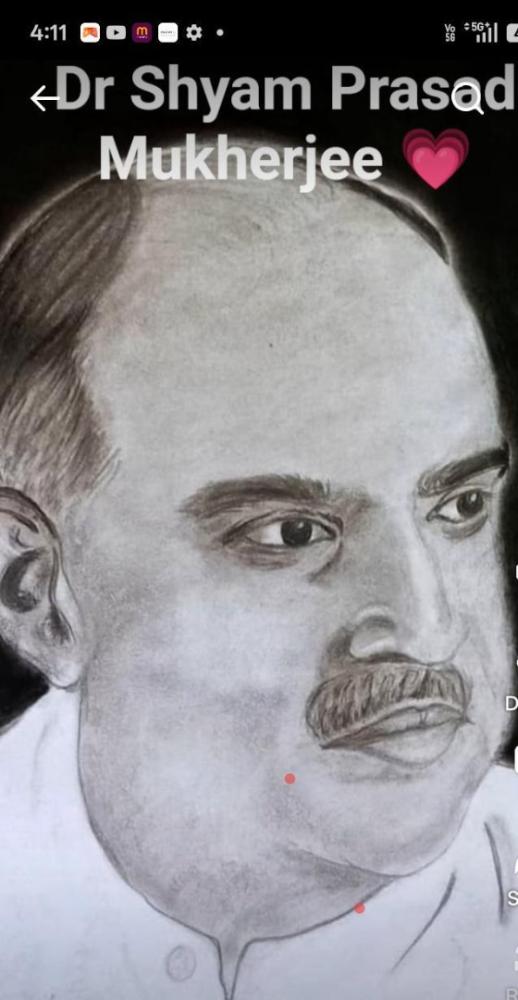
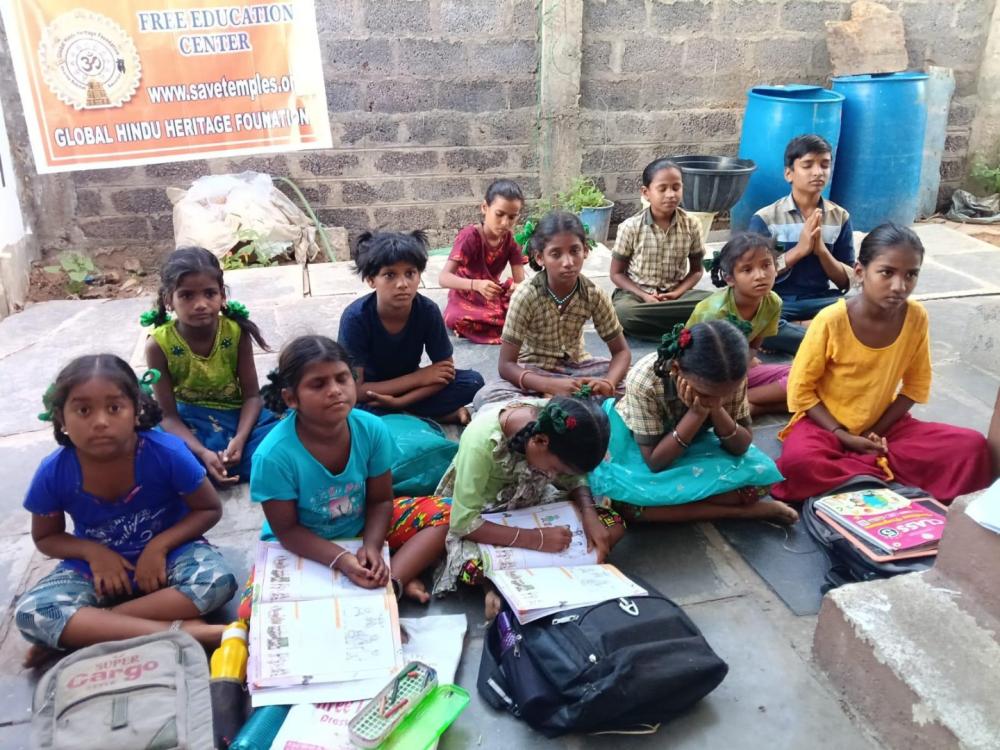
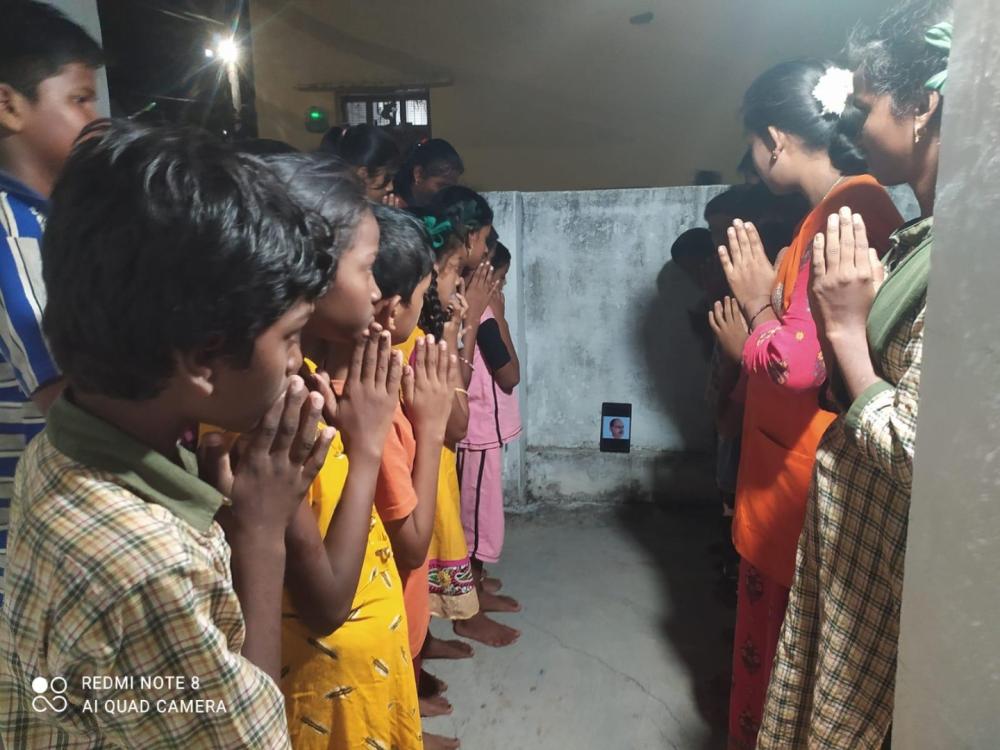
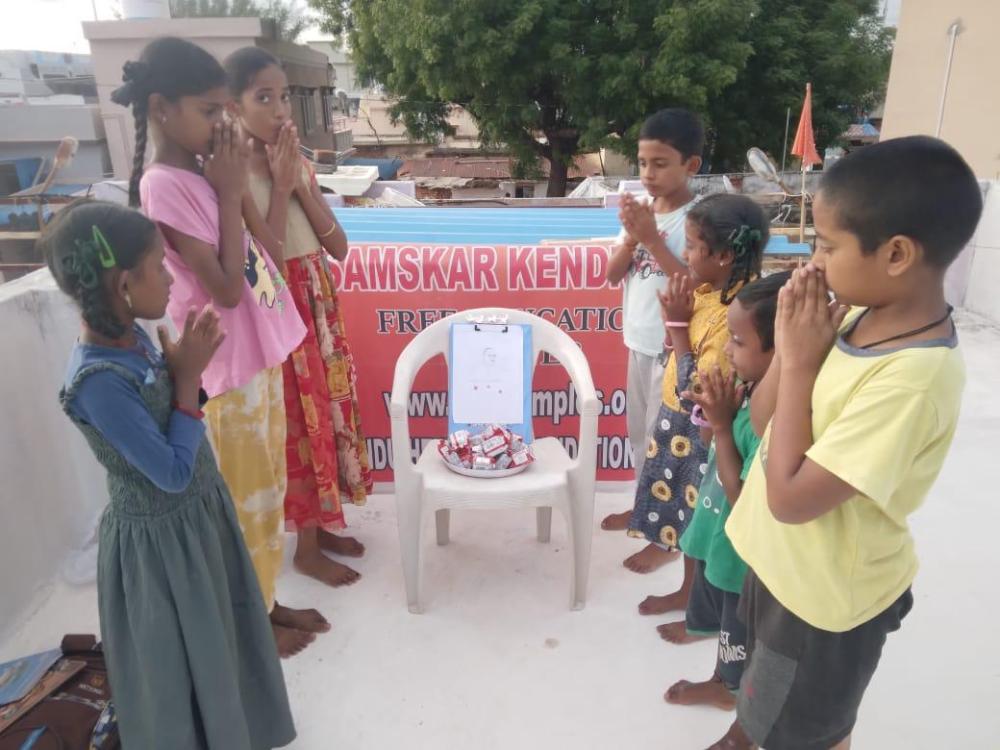
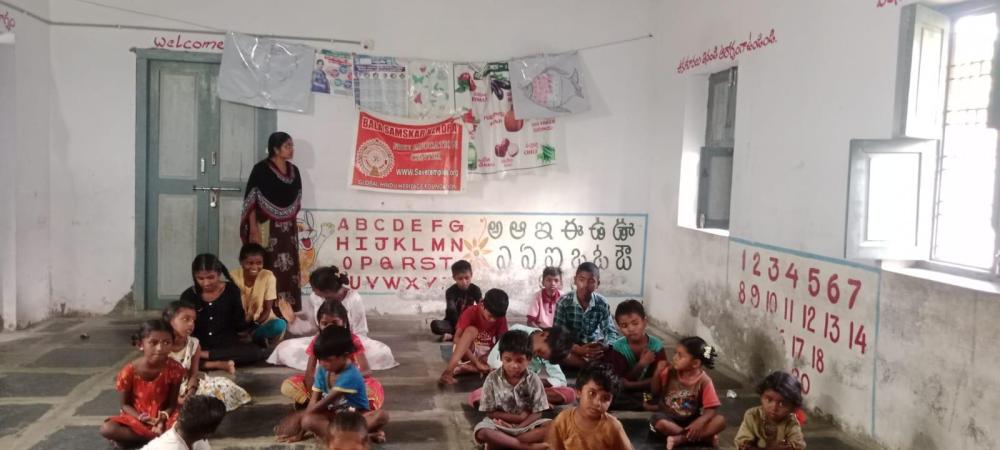
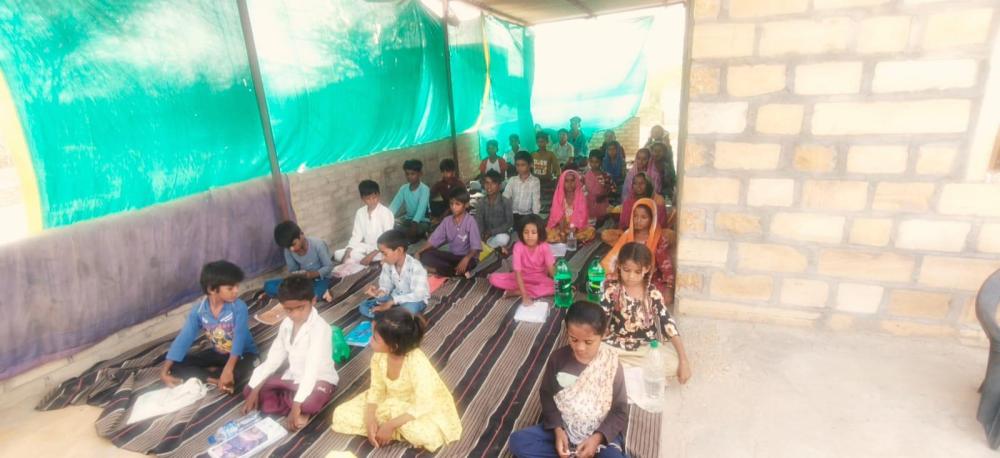
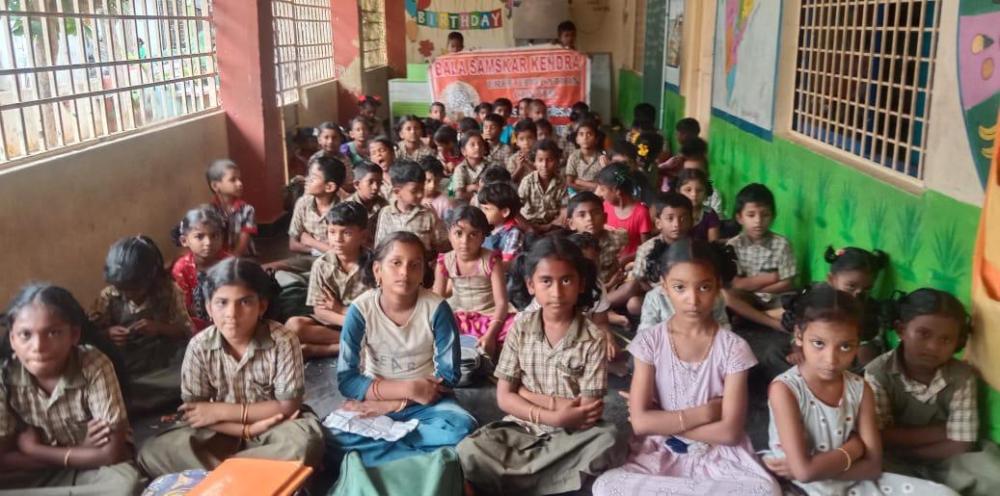
[GHHF] Students learned about Shyama Prasad Mookerjee, a Hindu activist who advocated “One country, one constitution, one flag.”
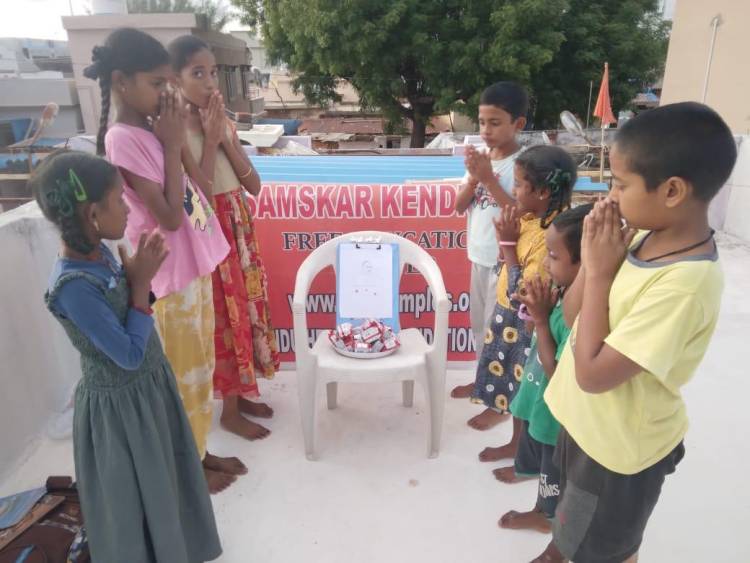 Shyama Prasad Mookherjee (6 July 1901 – 23 June 1953) was an Indian barrister, educationalist, politician, Hindutva activist, and a minister in the state and national governments, appointed by Nehru even after opposing the Congress Party.
Shyama Prasad Mookerjee was responsible for the Ministry of Industry and Supply in the Jawaharlal Nehru cabinet. However, differences soon arose between him and Nehru, compelling Shyama Prasad Mookerjee to leave the Congress and form his own party, the Bharatiya Jana Sangh. Shyama Prasad Mookerjee had a flourishing political career even before his stint as a congressman. He served as the Finance Minister of Bengal and was a major spokesman for the Hindus in Bengal through the Hindu Mahasabha.
Political Journey
Shyama Prasad Mookerjee entered into active politics after the end of his term as the Vice Chancellor of the University of Calcutta. He joined the Indian National Congress, from where he was elected to the Legislative Council of Bengal. However, Shyama Prasad Mookerjee resigned from the legislative council after only a year in office in support of Congress's decision to boycott the legislature. Shyama Prasad Mookerjee decided to contest elections as an independent candidate after his resignation. He won the elections and assumed office as the Finance Minister of the Bengal province for the term 1941-1942. Shyama Prasad Mookerjee protested against the communalist and separatist ideas propagated by Muslim League leader Mohammad Ali Jinnah. Jinnah wanted a separate Muslim state, a condition that Shyama Prasad Mookerjee decided to protest against.
He gradually became popular as a spokesman for Hindus in Bengal, and after he joined the Hindu Mahasabha, Shyama Prasad Mookerjee was appointed its President in the year 1944. However, Shyama Prasad Mookerjee soon realized that all that the Muslim League promoted was communal disharmony. He realized the futility of compromising with the Muslim League and being a part of a Muslim-dominated state. Therefore, Shyama Prasad Mookerjee no longer protested against separation; he spoke in favor of the partition of Bengal in 1946, saying that the Muslims could live in a separate state of East Pakistan. Later, it was the Hindus who were blamed for violence when Mahatma Gandhi was assassinated by a Hindu fanatic. The Hindu Mahasabha, of which Shyama Prasad Mookerjee was the president, came under attack after the assassination and was highly criticized.
While Jawaharlal Nehru had forwarded an invitation to the Pakistan Prime Minister to discuss issues on minority commissions and minority rights, Shyama Prasad Mookerjee was of the opinion that Pakistan was responsible for the influx of refugees from East Bengal in West Bengal. He even believed that the violence that was meted out to Hindus in East Pakistan was the result of Pakistan's support to the government of the country. Though Jawaharlal Nehru was prepared to appease Pakistan, Shyama Prasad Mookerjee refused to relent from his beliefs and thus quit the Congress. For his act, Shyama Prasad Mookerjee was hailed as a hero of West Bengal.
Shyama Prasad Mookerjee formed the Bharatiya Jana Sangh (BJS) on October 21, 1951, after his fallout with Jawaharlal Nehru. The BJS supported Hindu nationalism in the country. It stood for free-market economies, as opposed to the socialist economic policies pursued by Jawaharlal Nehru. However, Shyama Prasad Mookerjee did not believe in discriminating against the Muslims, and as such, he practiced the same civil code for both the Hindus and the Muslims. Shyama Prasad Mookerjee repeatedly spoke out against the ritual of cow slaughter, followed by the Muslims, and the special favors given to the Muslim majority state, Jammu and Kashmir. There was a rule during that point in time which prevented any Indian, including the President of India, from entering Jammu and Kashmir without the permission of the Prime Minister of the state. The 1952 general elections in the country saw Shyama Prasad Mookerjee and the BJS winning three seats in the Parliament. Protesting against the rule applicable in Jammu and Kashmir, Shyama Prasad Mookerjee visited Kashmir in 1953 and crossed the border without the permission of the state's authorities, thus facing arrest on May 11, 1953.
Death
Shyama Prasad Mookerjee was taken under house arrest on May 11, 1953. Keeping him locked inside a decrepit house did not help to improve his pleurisy and coronary problems, which he was already suffering from. Shyama Prasad Mookerjee was taken to the hospital in June and treated with penicillin in spite of repeated warnings to the medical authorities about his allergy to penicillin. Shyama Prasad Mookerjee died while he was in hospital under mysterious circumstances. He was declared dead on June 23, 1953, and though many, including his mother, wanted explanations and independent inquiries into the death, Jawaharlal Nehru clearly refused their demands, saying that once death was declared, there could be no mystery. The Hindu nationalist thus died a controversial death.
Your donations are appreciated:
By Zelle: ghhfusaorg@gmail.com
PayPal: savetemples.org
By Check: Or you can send a check payable to GHHF, 14726 Harmony Lane, Frisco, TX 75035.
It is tax-deductible.
By Rupees: call 601-918-7111; +91 83096 43979


 Urgent support needed for Bangladesh Hindus


