
[GHHF] A Historic Judgment. Supreme Court says a converted Christian ceases to be a member of the Scheduled Caste. A Christian cannot file an Atrocities Case against Hindus.
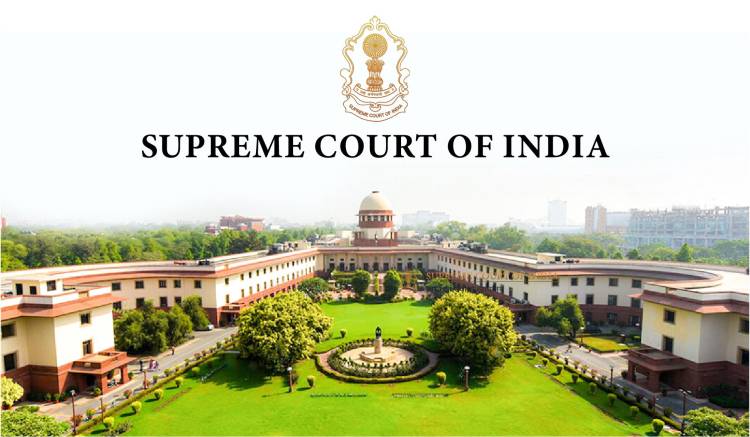 Kudos to the Supreme Court for its judgment that a converted Christian ceases to be a member of the Scheduled Caste. As per the passage of the Constitution (Scheduled Castes) Order, 1950, conversion to another religion results in an immediate and complete loss of Scheduled Caste status, irrespective of one’s birth.
This case was first filed in the High Court by Rajesh Thunuguntla. The judgment was issued on April 30, 2025. The Pastor went to the Supreme Court, which upheld the Andhra Pradesh High Court's judgment.
The legal battle stemmed from a 2021 criminal complaint filed by Chintada Anand against Akkala Rami Reddy. The Pastor came to a Kothapalli Village in the Bapatla District and wanted to convert Hindus into Christianity and build a Church. At the time, there were 600 Hindu families, totaling approximately 2,000 Hindus.
The bench of Justices Prashant Kumar Mishra and N V Anjaria upheld a judgment of the Andhra Pradesh High Court, ruling that conversion to Christianity results in the “immediate and complete loss” of Scheduled Caste (SC) status. “No person who professes a religion other than Hindu, Sikh, or Buddhist shall be a member of the Scheduled caste. Conversion to any other religion results in loss of Scheduled caste status,” the Court held. The judges maintained that “Only persons belonging to Hindu, Sikh or Buddhist faiths can claim Scheduled Caste status and conversion to any other faith like Christianity will result in the converted person losing Scheduled Caste status.”
The Andhra Pradesh High Court had earlier quashed the charges, observing that the caste system is "alien to Christianity" and that provisions of the SC/ST Act could not be invoked in such a case. This order was challenged before the Supreme Court.
"No statutory benefit, protection, or reservation or entitlement under the Constitution or enactment of Parliament or state legislature can be claimed.
The judgment came in an appeal filed by a pastor, Chintada Anand, who had challenged the Andhra Pradesh High Court's May 2025 judgment. Anand had alleged that he was subjected to caste-based abuse and assault by certain individuals and had invoked provisions of the SC/ST Act.
The court also clarified that merely holding a Scheduled Caste certificate does not automatically confer legal protections upon conversion. Issues relating to the cancellation of such certificates, it said, must be dealt with by the competent authority under the relevant state law.
It further said that “a person cannot simultaneously profess and practice a religion other than the ones specified in Clause 3 … and claim membership of a Scheduled Caste at the same time … The two positions are mutually exclusive and contrary to the Constitutional scheme.”
Affirming the High Court’s view, the Supreme Court relied on the Constitution (Scheduled Castes) Order, 1950, which restricts SC status to persons professing Hinduism, Sikhism, or Buddhism. The Bench clarified that the bar under Clause 3 of the 1950 Order is absolute. “No statutory benefit, protection or reservation… can be claimed by or extended to any person who by operation of Clause 3 is not deemed to be a member of the Scheduled Caste. This bar is absolute and admits no exception,” the Court observed.


 Urgent support needed for Bangladesh Hindus


