
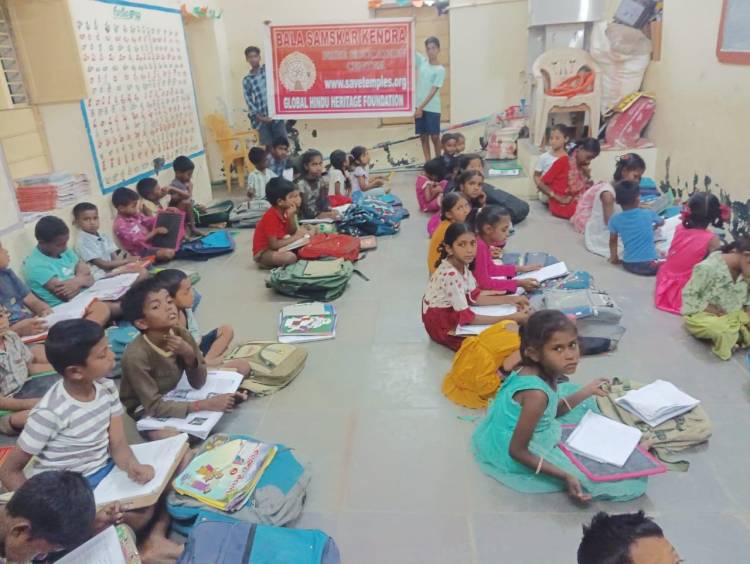
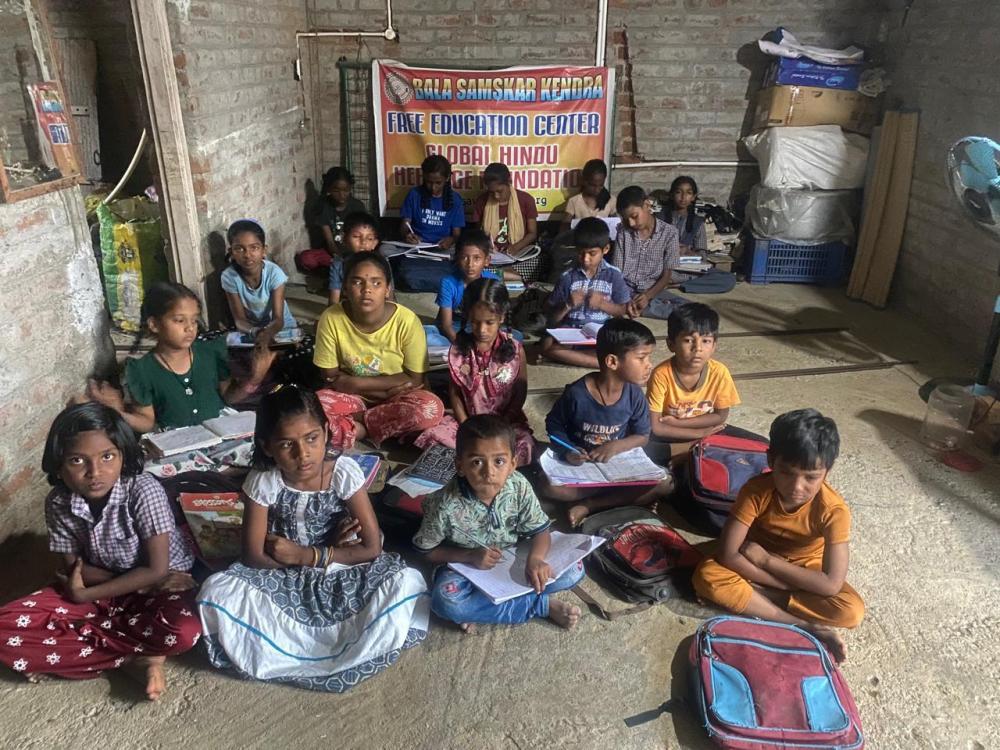
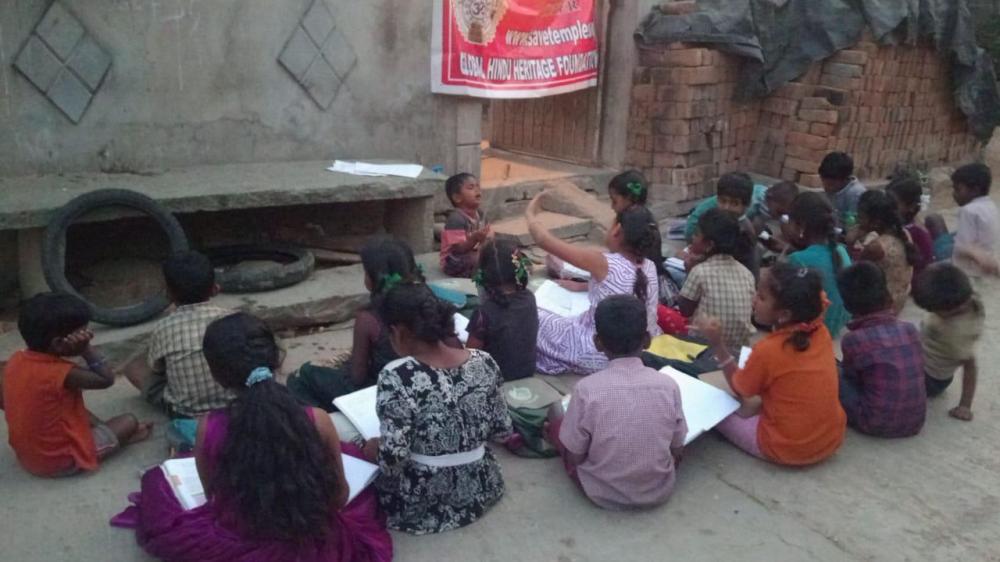
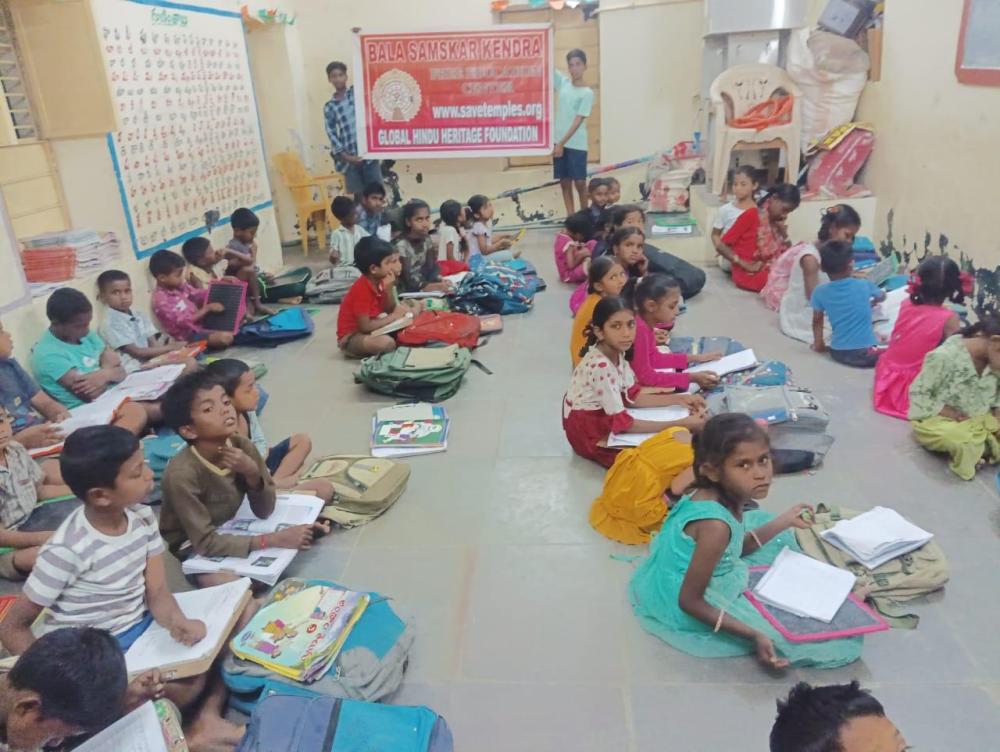
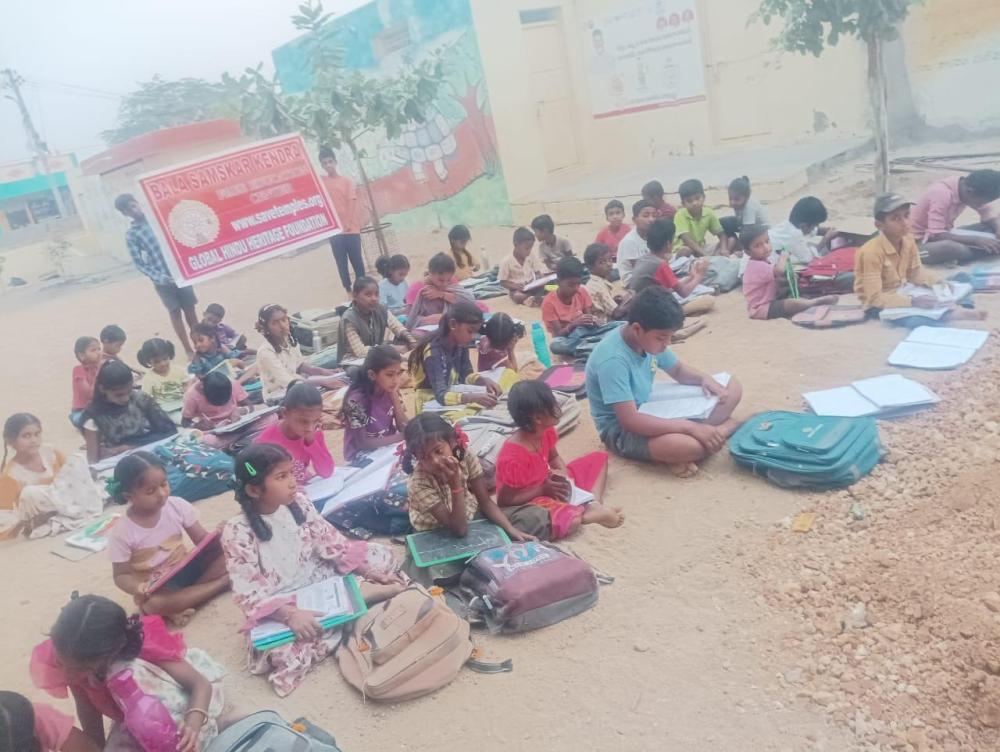
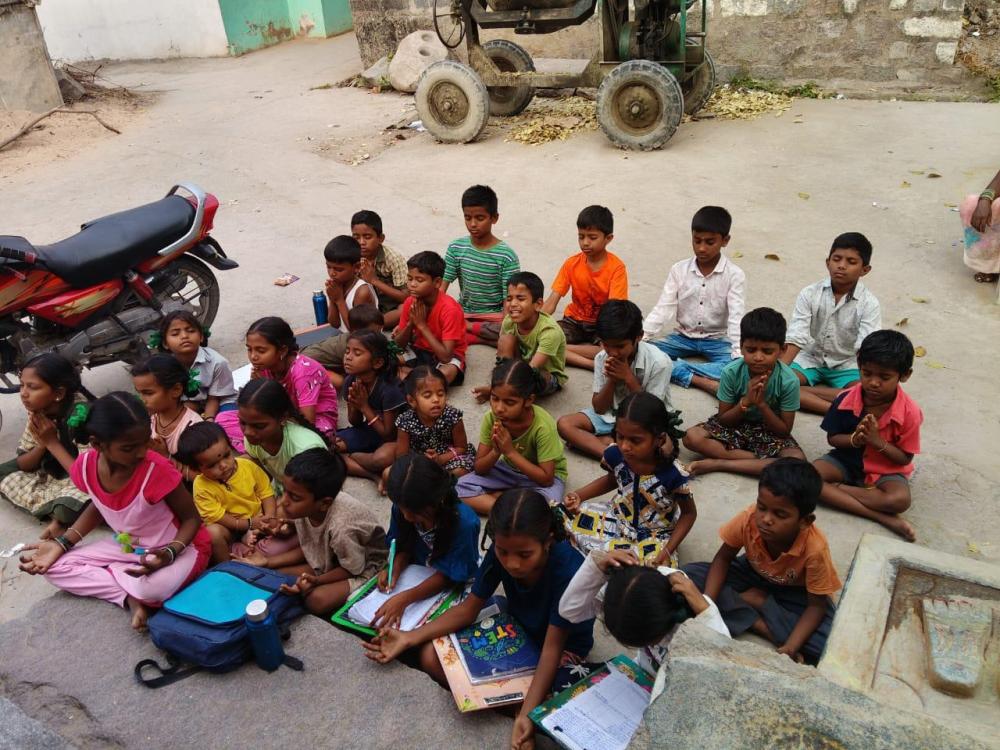
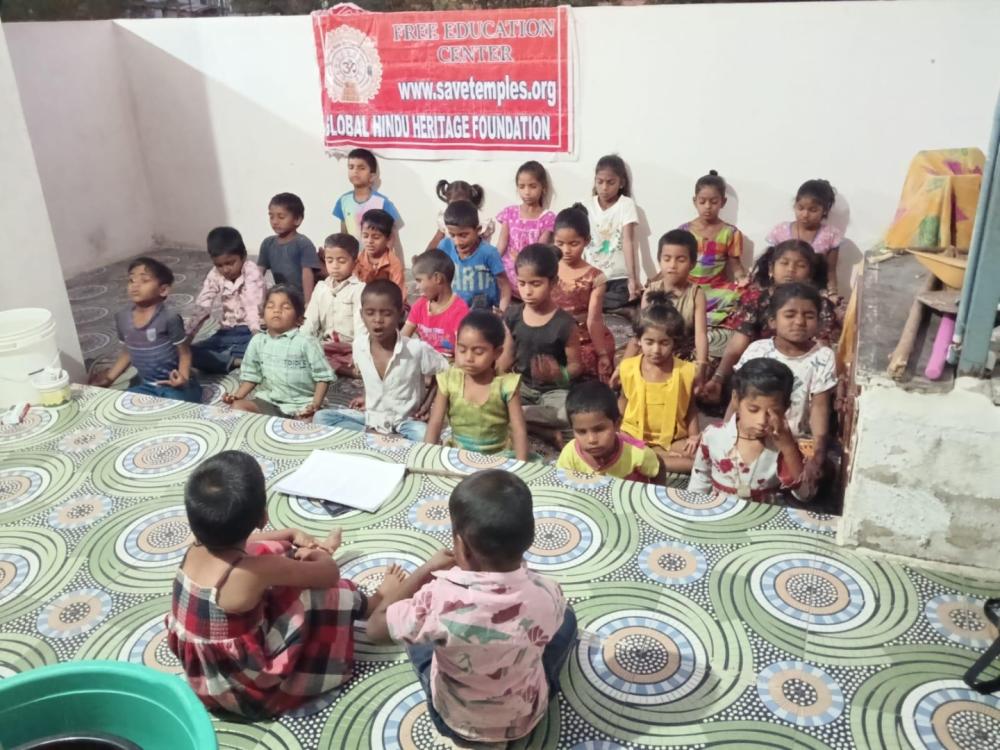
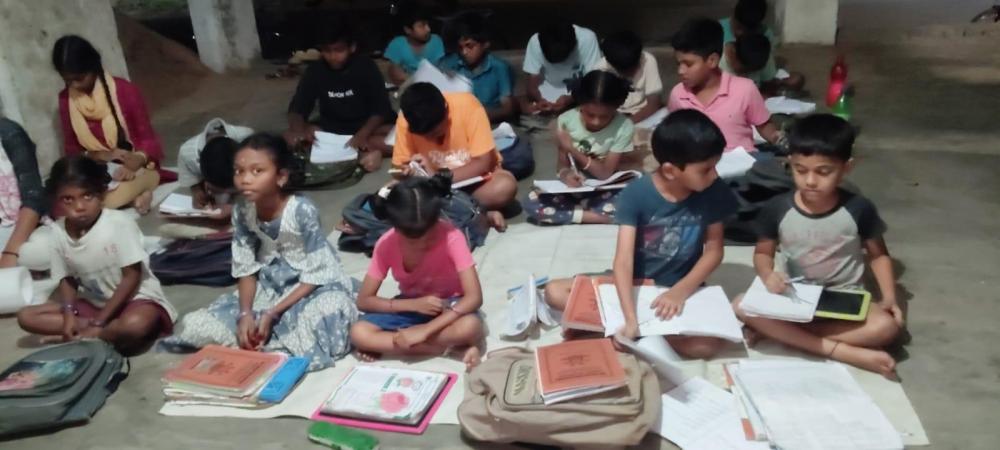
[GHHF] Ugadi – Students learned about the importance of the New Year that brings prosperity and the philosophy of life itself.
 Ugadi is celebrated on the first day of the Hindu calendar's Chaitra Masam, which falls in March-April. In Indian culture, there is a tradition of celebrating the new year by linking it with the cycle of nature. The word “Ugadi” comes from the Sanskrit word Yugadi. “yuga” means cycle of time, and “adi” means beginning. This means the beginning of a new cycle of time.
In India, when spring begins, nature awakens with new life. After winter ends, trees grow new leaves, flowers bloom, and the weather changes. Considering this change in nature as a sign of a new beginning, our ancestors recognized this period as the beginning of a new year.
This period also has a special significance in astronomical terms. There comes a time when the Earth revolves around the Sun twice a year, when day and night are almost equal. This event is known as the Spring Equinox. Currently, a new seasonal cycle begins on Earth. In many cultures, spring marks the new year.
Spring was seen as the start of a new year, not just in India, but also in several other ancient civilizations around the world. For example, in Persian culture, Navroz, in China, the spring festival, and in ancient Roman times, the new year began near the spring equinox.
This new year is celebrated by different names in different parts of India. In Andhra Pradesh, Telangana, and Karnataka, it is called Ugadi or Yugadi. In Maharashtra, it is called Gudi Padwa. In North India, Chaitra Navratri begins at this time. In regions such as Tamil Nadu, Kerala, and Bengal, people observe the new year several days later, following the solar calendar. Although the dates change, the meaning is the same — the beginning of a new year at a time when nature is newly awakening.
Indians developed a unique system of calculating time thousands of years ago. This is called Panchangam. The Panchangam is the five elements used to understand time — Tithi, Week, Nakshatra, Yoga, and Karanam. Festivals, pilgrimages, and other events were determined by these calculations.
In ancient times, the Panchangam was written and preserved on palm leaves. Typically, they were stored in temples or maintained by scholars. At the beginning of the year, there is a tradition of listening to the Panchanga Sravana to learn the timetable for that year.
Another unique aspect of Indian chronology is the 60-year cycle. Each year has a unique name. This system has a celestial connection. Jupiter takes about 12 years to revolve around the Sun. Saturn takes about 30 years to orbit the Sun. The orbits of these two planets bring them near each other roughly every 60 years. That is why Indian astronomers have devised a 60-year cycle.
An important ritual performed on Ugadi is Ugadi Pachadi. It consists of six types of flavors — neem, jaggery, tamarind, mango, chili, and salt. These six flavors represent different life experiences. Life brings together happiness, challenges, surprises, excitement, experiences, and fresh emotions. That is why our ancestors gave the message that we should accept every experience in life equally by eating this Pachdi at the beginning of the year.
Ugadi chutney also has a special significance in terms of health. Ugadi is the spring season. According to Ayurveda, during this period, Kapha dosha increases in the body. Neem purifies the blood and increases immunity. Jaggery gives energy and improves digestion. Tamarind gives coolness to the body. Mango increases digestion. Chilli improves blood circulation. Salt maintains a fluid balance in the body. Therefore, Ugadi chutney is a healthy food that corresponds to the change of season in a way.
Nowadays, many countries of the world celebrate the New Year on January 1. However, this date is selected without reference to any natural cycles. Indian tradition determines the New Year through natural changes, astronomical calculations, and life philosophies. That is why our traditions are not just superstitions — they are a combination of spirituality, health science, and observation of nature.
That is why Ugadi not only gives us a new year, but also a great message — we should live in balance with nature, embrace every experience in life with courage, and continue our culture with respect.
Teacher Tasks
Discussion (Analysis) after the story
Question: Why is Ugadi usually celebrated in spring?
Answer: It is the time when nature wakes up after winter. During this time, the astronomical state (Spring Equinox) also occurs.
Question: Why is there a 60-year cycle in the Indian calendar?
Answer: Our ancestors created this cycle by observing the movements of the planets Jupiter and Saturn.
Question: What philosophy of life does Ugadi chutney convey?
Answer: We should embrace all experiences in life, such as sweet, bitter, and sour, equally.
Expression (Creativity)
Experience of flavors:
Children should taste the six flavors of Ugadi chutney, one by one, and explain the meanings and health benefits of each.
Drawing / Poetry:
Children should draw or draft a short poem about the changes in nature during spring.
Examples: Mango gums, swallows' song, green trees.
Practical work (implementation)
New Year's Resolution: Children should write in their diary one good quality that they will practice this year (e.g. punctuality, cleanliness, respect for elders).
Nature Service: Each student should take responsibility for watering and caring for an existing plant at home or school. They should resolve to plant a new plant when the rainy season arrives.
Your donations are appreciated.
By Zelle: ghhfusaorg@gmail.com
PayPal: savetemples.org
By Check: Or you can send a check payable to GHHF, 14726 Harmony Lane, Frisco, TX 75035.
By Rupees: call 601-918-7111; +91 83096 43979




 Urgent support needed for Bangladesh Hindus


