
[GHHF] From Clay to Divinity: GHHF Promotes an Eco-Friendly Vinayaka Chavithi Rooted in Sanatana Dharma Vahid S; Nov 2, 2026.
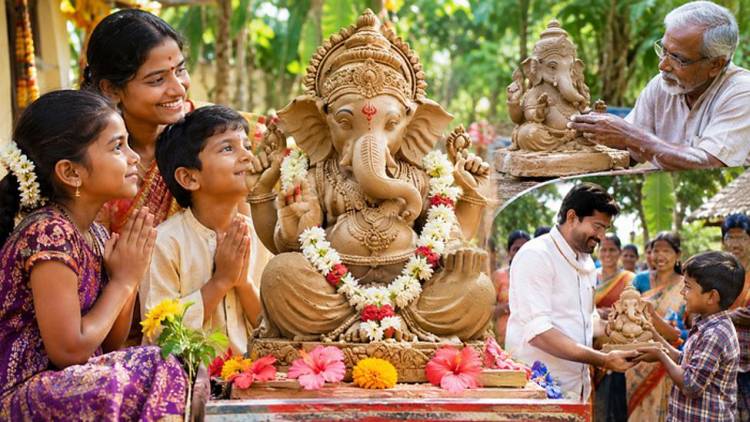 Vinayaka Chavithi is one of the most cherished festivals in Sanatana Dharma, celebrating Lord Ganesha, the remover of obstacles and the symbol of wisdom, prosperity, and auspicious beginnings. Beyond its devotional significance, the festival carries an important message about humanity’s relationship with nature. The traditional worship of Lord Ganesha through natural clay reflects the belief that the elements of creation are sacred and deserve our protection.
Recognizing this connection between devotion and environmental responsibility, the Global Hindu Heritage Foundation (GHHF) has been conducting grassroots initiatives to encourage the use of traditional clay Ganesha idols instead of chemically painted or Plaster of Paris (PoP) idols. Through free distribution drives and community awareness programmes, GHHF volunteers are helping families celebrate the festival in a way that respects both scriptural traditions and ecological balance.
Returning to the Traditional Clay Ganesha
The traditional practice of worshipping Lord Ganesha through a clay idol has deep cultural and spiritual significance. The Varasiddhi Vinayaka Vratakalpa describes the use of gold or silver idols according to one’s means, or a clay idol as an alternative:
स्वशक्त्या गणनाथस्य स्वर्णरौप्यमयाकृतिम् ।
अथवा मृन्मयीं कार्यां वित्तशाठ्यं न कारयेत् ॥
The verse emphasizes that devotees may worship according to their capacity and that a clay idol is an accepted traditional choice. Clay also reflects the natural cycle of creation and dissolution. According to the familiar sacred narrative, Goddess Parvati fashioned Lord Ganesha from the earth. The clay idol, worshipped with devotion and eventually returned to the natural elements, reminds devotees of the close relationship between the Divine and nature.
GHHF’s campaign builds on this traditional understanding. Its message is simple: celebrations should not come at the cost of environmental damage. By choosing natural clay over chemical materials and non-biodegradable alternatives, communities can preserve the spirit of the festival while reducing pollution.
Grassroots Campaigns Across Andhra Pradesh
GHHF pracharaks and volunteers have taken this message directly to communities, engaging families, children, local residents, and festival organizers.
In Banapuram Colony of I. Polavaram Mandal, Dr. B. R. Ambedkar Konaseema District, pracharaks B. Lakshminarayana and B. Kanaka Rao brought residents together for Bhagavannama Lekhana, the sacred writing of divine names. Children and elders participated in writing and chanting names such as Sri Rama Nama, creating an atmosphere of devotion and community participation.
During the programme, the volunteers highlighted the importance of protecting Hindu cultural traditions and strengthening unity within society. They also interacted with local pandal organizers, encouraging them to maintain traditional decorum, overcome social divisions, and distribute natural clay Ganesha idols to families so that the celebrations could remain environmentally responsible.
Similar initiatives were carried out across Natavaram, Narsipatnam, Jilledupudi, and neighbouring villages in Anakapalli District. Pracharaks Raju and P. P. Raju, together with dedicated volunteers, organized free clay idol distribution drives and engaged mandal-level festival organizers in discussions about making public celebrations more traditional, inclusive, and environmentally conscious.
The campaign carried the inspiring message, “Matti Ganapathi — Maha Ganapathi”, encouraging families, young people, and children to embrace handcrafted clay idols. By making these idols available free of cost, the volunteers helped remove financial barriers and made environmentally responsible celebrations more accessible to local communities.
Devotion, Community Unity and Environmental Responsibility
The GHHF initiative demonstrates how cultural education and community participation can work together. The distribution of clay idols is not simply an alternative arrangement for a festival; it is an opportunity to reconnect younger generations with traditional practices and explain the values behind them.
Through interactions with local organizers and residents, the volunteers are encouraging celebrations that bring people together beyond social divisions. The programmes also remind communities that Sanatana Dharma is not limited to worship and ritual observance. It teaches respect for nature, responsibility toward society, and harmony with the world around us.
As Lord Ganesha is welcomed into homes and community pandals, the choice of a natural clay idol becomes a meaningful expression of these values. It allows devotees to honour tradition while remaining mindful of the environment.
Preserving Dharma Through Responsible Celebration
The efforts of Global Hindu Heritage Foundation reflect the importance of preserving India’s cultural heritage through practical, community-led action. By promoting traditional clay Ganesha idols, organizing awareness activities, and engaging festival committees, GHHF is encouraging a celebration that combines devotion with ecological awareness.
The message of the campaign is worth carrying forward: our festivals should strengthen our connection with nature, not place an additional burden upon it. Choosing Matti Ganapathi is a small but meaningful step toward preserving the traditions of Sanatana Dharma and protecting the environment for future generations.
As devotees celebrate Vinayaka Chavithi, may the blessings of Lord Ganesha inspire wisdom, unity, and a renewed commitment to living in harmony with Mother Nature.
Om Gam Ganapataye Namaha! Jai Sri Ram!
Reference: GHHF — Echoes of Clay, Essence of Dharma: How GHHF Is Restoring Ecological Sanctity to Vinayaka Chavithi. Your donations are appreciated.
By Zelle: ghhfusaorg@gmail.com
PayPal: savetemples.org
By Check: GHHF, 14726 Harmony Lane, Frisco, TX 75035.
Call 601-918-7111; +91 83096 43979


 Urgent support needed for Bangladesh Hindus


