
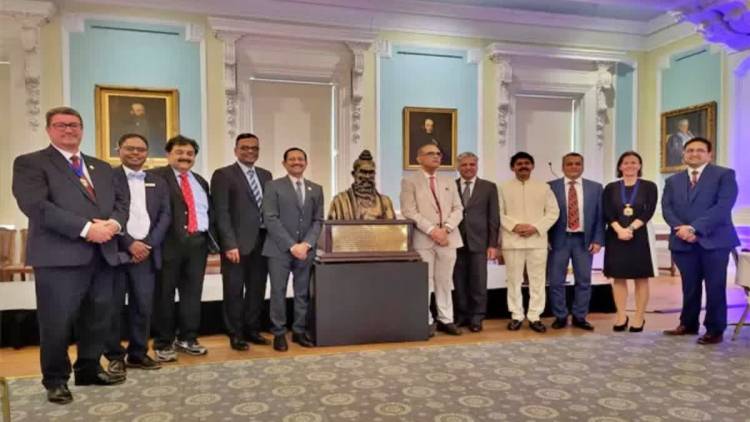
[GHHF] Bronze Maharshi Sushruta Statue was unveiled at the Royal College of Surgeons in Edinburgh, UK.
 He is considered the Father of Surgery and a Pioneer of Ancient Indian Medicine
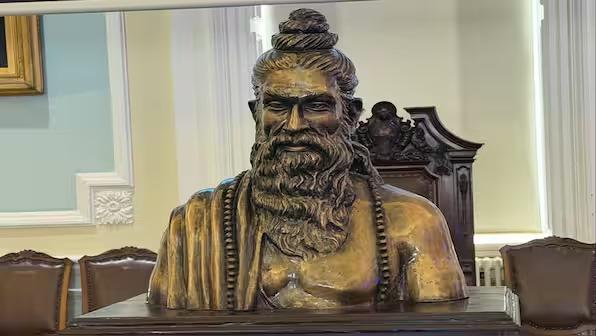
On an extremely rare occasion, the Statue of Maharishi Sushruta, the father of Surgery and a Pioneer of Ancient Indian medicine, was unveiled, recognizing his remarkable contribution to surgery. The statue, crafted in Tamil Nadu, was exported to the UK and unveiled at the Royal College of Surgeons of Edinburgh, the world’s oldest surgical institution, on June 19, 2026.
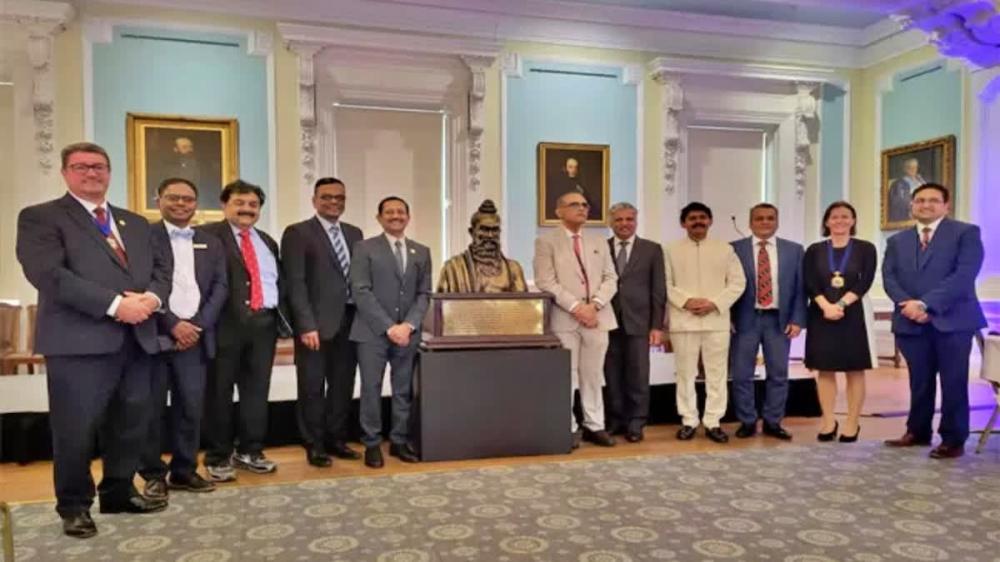
The statue was commissioned and donated by the Cheruvu Family Foundation, established by Professor Chandra Cheruvu. The ceremony was attended by dignitaries including Siddharth Malik, Consul General of India in Edinburgh, Clare McNaught, President of the Royal College, Rowan Parks, immediate past president, and numerous surgeons and medical professionals from around the world
The presence of the statue at the Royal College of Surgeons of Edinburgh bridges ancient Indian medical knowledge with modern surgical education, inspiring future generations of surgeons worldwide
Who Is Maharshi Sushruta?
India has made extraordinary contributions to science, mathematics, astronomy, philosophy, and medicine. Among its greatest medical luminaries is Maharshi Sushruta, revered worldwide as the Father of Surgery and one of history's earliest and most accomplished surgeons. His monumental work, the Sushruta Samhita, laid the foundation for surgical science and remains one of the oldest surviving medical treatises devoted to surgery.
Sushruta's remarkable achievements in reconstructive surgery, ophthalmology, orthopedics, anatomy, medical ethics, and surgical education demonstrate the advanced state of medical knowledge in ancient India. His emphasis on observation, practical training, and compassionate patient care continues to inspire modern medicine.
Historical Background
According to the Ayurvedic tradition, Maharshi Sushruta lived in Kashi (Varanasi) around the first millennium BCE and was a disciple of Lord Dhanvantari, the divine physician, who is described in the Sushruta Samhita as King Divodasa of Kashi.
The opening chapter of the Sushruta Samhita states:
"Lord Dhanvantari, in the form of King Divodasa of Kashi, imparted the sacred science of surgery to Sushruta and other sages." (Sushruta Samhita, Sutra Sthana, Chapter 1)
Although scholars differ regarding the exact date of Sushruta, most place him between 1000 BCE and 600 BCE, making him one of the earliest known physicians in recorded history.
The Sushruta Samhita
The Sushruta Samhita is one of the three foundational texts of Ayurveda, along with the Charaka Samhita and the Ashtanga Hridaya. It contains approximately:
• 186 chapters
• More than 1,100 diseases
• About 700 medicinal plants
• Over 300 surgical procedures
• More than 120 surgical instruments
The text covers surgery, anatomy, physiology, obstetrics, orthopedics, ophthalmology, toxicology, pediatrics, dentistry, wound management, and preventive healthcare, making it one of the most comprehensive medical works of the ancient world.
Contributions to Surgery
Sushruta was the first physician to systematically classify surgical procedures into eight categories, including excision, incision, puncturing, extraction, drainage, and suturing. He described numerous operations that were centuries ahead of their time.
His most celebrated contribution is rhinoplasty (nose reconstruction) using a skin flap from the forehead or cheek. This technique became known centuries later as the "Indian Method" and influenced modern plastic surgery.
Sushruta also described:
• Cataract surgery using a specialized needle
• Repair of fractured bones and joint dislocations
• Treatment of wounds and burns
• Removal of bladder stones
• Ear and lip reconstruction
• Caesarean and obstetric procedures
• Management of traumatic injuries
These innovations earned him worldwide recognition as the Father of Plastic Surgery and Father of Surgery.
Surgical Instruments
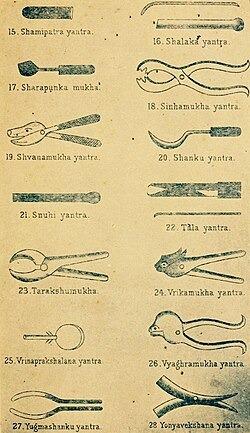
The Sushruta Samhita describes more than 120 surgical instruments, including scalpels, forceps, needles, hooks, probes, saws, catheters, and retractors. Many were designed after the shapes of birds' beaks and animal mouths, demonstrating Sushruta's keen observation of nature and functional design.
Medical Ethics
Sushruta believed that knowledge alone did not make a physician; moral character was equally important.
He advised doctors to:
• Treat every patient with compassion and respect.
• Maintain cleanliness and discipline.
• Continue lifelong learning.
• Avoid greed and dishonesty.
• Never perform procedures beyond their competence.
• Place the welfare of the patient above personal gain.
These ethical principles continue to guide medical professionals today.
Ayurveda and Scriptural Foundations
Ayurveda is traditionally regarded as the Upaveda (subsidiary Veda) of the Atharva Veda. Its objective is beautifully summarized in the Charaka Samhita:
"The purpose of Ayurveda is to protect the health of the healthy and to relieve the suffering of the sick." (Charaka Samhita, Sutra Sthana 30.26)
Lord Dhanvantari, revered as the deity of medicine, is described in the Bhagavata Purana (8.8) as emerging from the churning of the cosmic ocean carrying the pot of Amrita (nectar of immortality), symbolizing healing, longevity, and medical wisdom.
Global Influence
Between the eighth and tenth centuries CE, the Sushruta Samhita was translated into Arabic and became known to physicians in the Islamic world. Centuries later, European surgeons studied the Indian technique of rhinoplasty, which influenced the development of reconstructive surgery in the West.
Today, historians of medicine recognize Sushruta as one of the greatest pioneers in surgical science. His work demonstrates that ancient India possessed a highly developed system of scientific medicine based on observation, experimentation, education, and ethical practice.
Conclusion
Maharshi Sushruta's contributions extend far beyond Ayurveda. His pioneering work in surgery, anatomy, medical education, and ethics established principles that remain relevant even in modern healthcare. The Sushruta Samhita stands as a timeless testament to India's rich scientific heritage and its enduring contribution to world medicine.
As physicians continue to advance the frontiers of medical science, Sushruta's teachings remind us that true medicine combines knowledge, technical skill, ethical conduct, and compassion. More than two millennia after his lifetime, Maharshi Sushruta continues to inspire surgeons and healthcare professionals across the world.


 Urgent support needed for Bangladesh Hindus


