
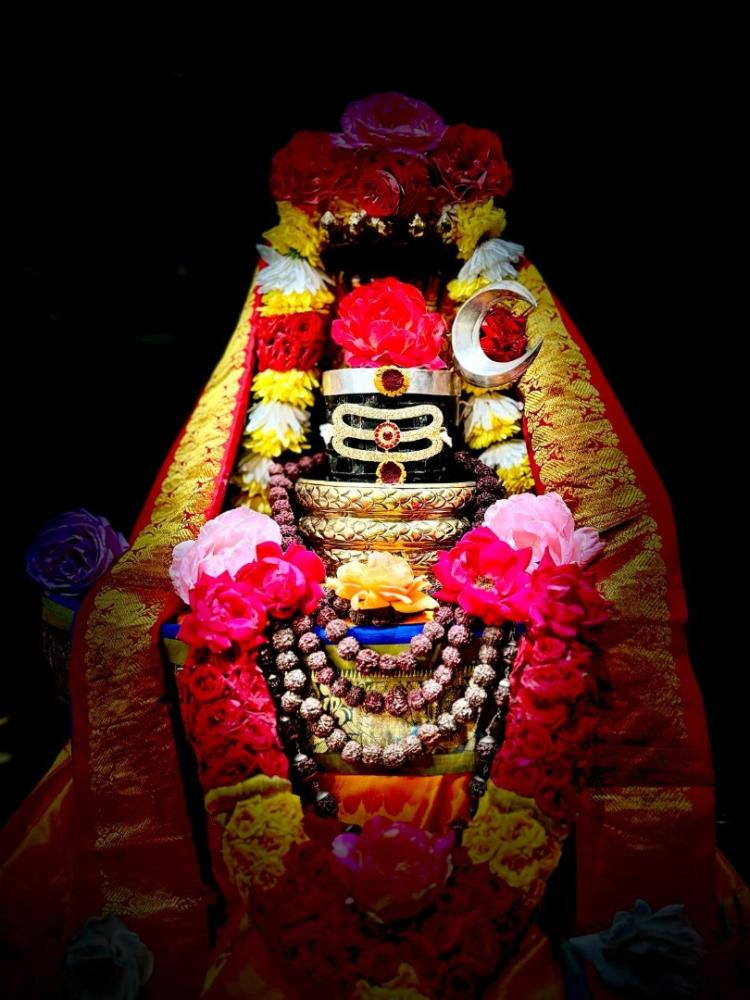
[GHHF] Maha Shivaratri was celebrated by our Bhajan groups by singing the glory of Lord Shiva to create harmony, foster spiritual growth, and purify the atmosphere.
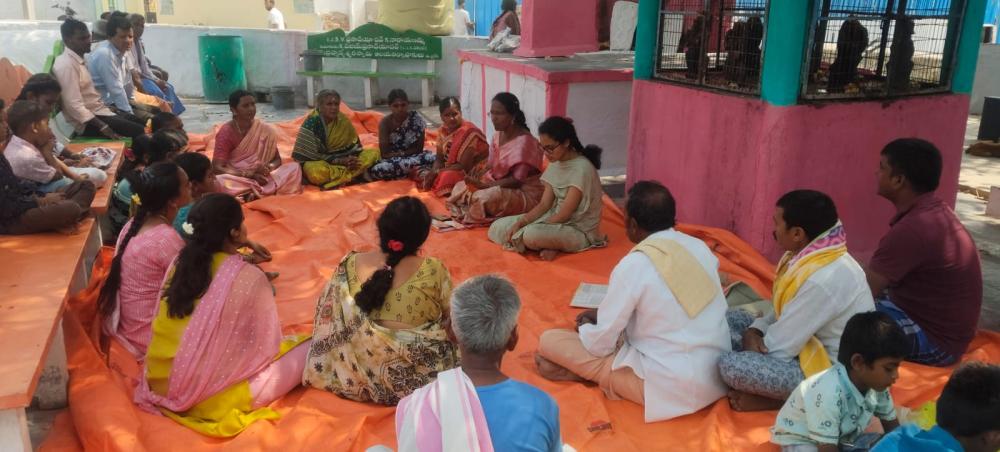
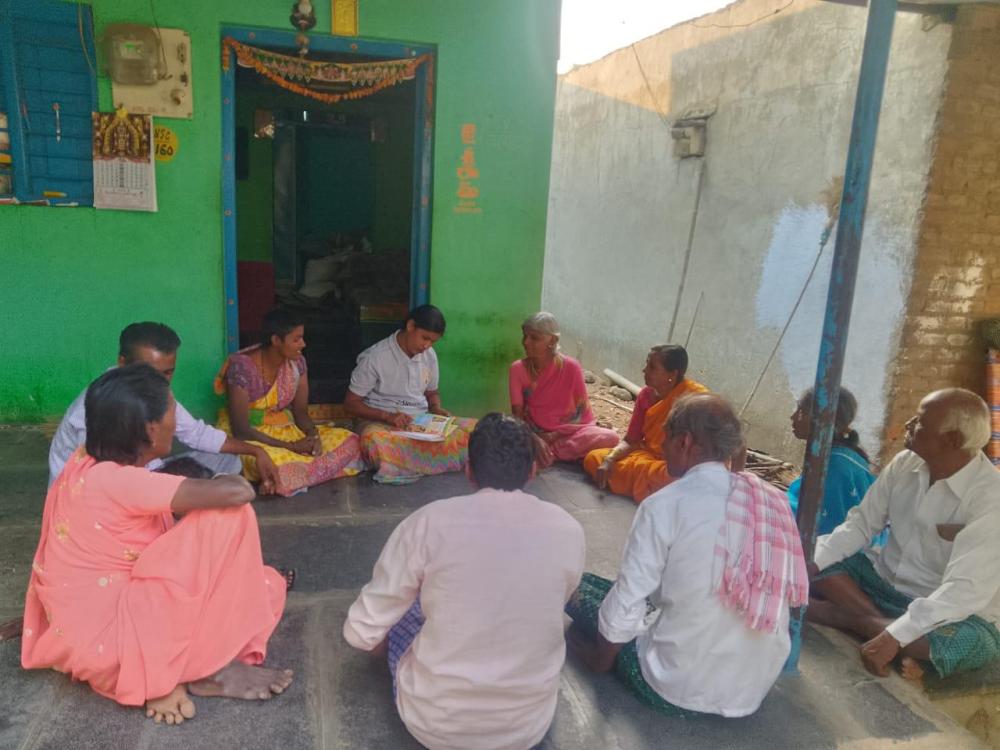
 Global Hindu Heritage Foundation is extremely happy to inform that we organized a bhajan session on the night of Maha Shivaratri, praising the glories of Lord Shiva. As many of you are aware, GHHF initiated Bhajan groups in many villages and donated hundreds of sound systems to these groups and Temples. In Many places, our Bhaja groups stayed until midnight to witness Lingodbhava. The consistent, persistent attempts to organize these Bhaja programs make the villagers aware of the importance of singing and of creating positive energy in the villages.
Singing bhajans on Maha Shivaratri is crucial for fostering deep devotion, maintaining wakefulness (Jagaran) during the night-long vigil, and creating a meditative, high-energy spiritual atmosphere. It aids in inner transformation, helps devotees connect with Lord Shiva's divine consciousness, and purifies the mind. Bhajans are sung to create a powerful atmosphere that helps people focus. Singing also helps people to contemplate the virtues of compassion, calmness, and fearlessness.
On Maha Shivaratri, all our Bhajan groups sang bhajans to Lord Shiva. The whole atmosphere was filled with “Om Namah Shivaya.” Shiva Shia Shambo, Shiva Tandava Stotram, Shiva Panchakshari Stotram, Lingashtakam, and others were sung.
It was decided to organize these Bhajans in the village to reinforce faith among villagers, especially during Maha Sivaratri. A bhajan is a Hindu devotional song, often of ancient origin. Bhajans are often simple songs in lyrical language that express love for the Divine, whether for a single God and Goddess or for multiple divinities. Many bhajans feature several names and aspects of the chosen deity, especially in Hindu Sahasra Namas, which list 1008 names of a divinity. Great importance is attached to singing Bhajans with Bhakti, i.e., loving devotion. "Rasanam Lakshanam Bhajanam" means the act by which we feel closer to our inner self or God, is a bhajan. Acts performed for God are called bhajan.
Hindu scriptures state that in Kaliyuga, people have a disturbed mind, experience restlessness, and lack peace of mind. They live in an environment that agitates their minds. By chanting the names of Bhagawan, one gets peace of mind as they concentrate on the image of the Goddess. Devotional singing, known as bhajans or kirtan, can help quiet the mind so the heart can open to the divine, allowing us to taste the blissful reality of our true nature. Everyone is encouraged to sing and express their inner joy. Devotion is the most important aspect of kirtan. To gain concentration in this age of materialism, bhajan is easier than meditation. By loud singing, other distracting sounds will be overcome, and concentration will be achieved. Bhajan, concentration, and meditation are the progression. Bhajan is important for the devotee because it is intimate and free in expression. Bhajan preserves India’s rich legacy of devotion, wisdom, and mysticism, including the works of saints such as Meerabai, Tulsidas, Kabir, Surdas, Thyagaraja, Purandaradasa, Tukaram, Namdev, and many others.
Paramahamsa Yogananda says, “Sankirtans or musical gatherings are an effective form of yoga or spiritual discipline, necessitating intense concentration, absorption in the seed thought and sound. Because man himself is an expression of the Creative Word, sound exercises on him a potent and immediate effect.”
As per much research, it has been found that listening to bhajans and chants increases the activity in the cells, which releases the feel-good hormone “Dopamine.” Various studies also show that listening to bhajans activates our brains, making us more analytical and Attentive; hence, most people prefer to listen in the morning.
Doctors at Cleveland University reported that the rhythmic tones involved in chanting release a cascade of naturally healing chemicals. Imagine feeling good naturally without a pill. They called it the NLE, or Neurolinguistic Effect. Yogis call it a type of samadhi – a profound sense of peacefulness.
Sri Ganapathy Sachchidananda Swamiji says Bhajan singing (singing of God's name) is one of the main methods that Sri Ganapati Sachchidananda Swamiji propagates as a part of the Yoga System. According to Sri Swamiji, "The chanting and singing of God's name is the sheet anchor in all critical situations and crises. In this Kali Yuga, Divya Naama Sankeertana (singing of God's name) is the easiest and the most effective means to invoke the mercy of the Lord."
As He often says, "Just as Bhojana (food) is for the body, Bhajans are for the Soul". Pujya Sri Swamiji is composed of thousands of devotional bhajans in different languages. Devotees of Sri Swamiji gather in Satsang groups all over the world to sing Sri Swamiji's soul-stirring Bhajans. Many devotees experience that this is one of the best ways to feel divine presence in their hearts.
Donations are appreciated.
By Zelle: ghhfusaorg@gmail.com
PayPal: savetemples.org
By Check: You can also send a check payable to GHHF,14726 Harmony Lane, Frisco, TX 75035.
It is tax-deductible.
By Rupees: call 601-918-7111; +91 83096 43979.








 Urgent support needed for Bangladesh Hindus


