

Post

[GHHF] In the divine presence of Sri Ganapathy Sachchidananda Swamiji, Sampurna Bhagavad Gira Parayanam was conducted with 600 memorizers and 500 fluent readers chanting all 700 slokas in Allen, Texas.

On August 2, 2026, with the divine blessings of Sri Ganapathy Sachchidananda Swamiji and in his presence, Sampoorna Bhagavad Gita Parayanam was conducted at Credit Union of Texas Event Center, Allen, Texas.  This is the eleventh batch of students.

03 Aug 2026

Recent Posts

[GHHF] In the divine presence of Sri Ganapathy Sachchidananda Swamiji, Sampurna Bhagavad Gira Parayanam was conducted with 600 memorizers and 500 fluent readers chanting all 700 slokas in Allen, Texas.

On August 2, 2026, with the divine blessings of Sri Ganapathy Sachchidananda Swamiji and in his presence, Sampoorna Bhagavad Gita Parayanam was conducted at Credit Union of Texas Event Center, Allen, Texas.  This is the eleventh batch of students. There are more than 600 memorizers - some of them are as young as 3 years. Nearly 500 fluent readers also participated in the Parayanam. They have rendered all 700 verses of the Holy Bhagavad Gita. Nearly 10, 000 people attended the Maha Yagna and were immersed in the divine message of the Bhagavad Gita. The Swarna Yatra USA tour, hosted in the divine presence of HH Parama Pujya Sri Ganapathy Sachchidananda Swamiji, marked a multi-day celebration that included Guru Purnima celebrations, a youth music festival (Guru Vandanam), and a specialized Gita Talent Show. Vibrations filled the air in the Event center for nearly four hours. Sri Swamiji talked about the importance of the Bhagavad Gita, how it improves memory and even changes children's behavior. SGS Gita Foundation, Karya Siddhi Hanuman Temple and Yoga Sangita have coordinated the event.  As many of you are aware, in August 2022, history was made. Guinness World Record was awarded for reciting the Bhagavad Gita by 1361 memorizers on August 13, in the evening. Sahasra gala Parayanam was conducted in Allen Event Center. Nearly 7000 people attended this historic event. Why is the Bhagavad Gita, and what is its message to the world? It is a spiritual manual on how to face the battles of daily life with fearlessness, clarity, resilience, and outlook. When Arjuna was paralyzed by grief, uncertainty, fear, anxiety, and doubt in fulfilling his responsibility, Lord Krishna counseled him not to escape from the world and how to live a dynamic life while maintaining inner peace. Arjuna was told to do his dharma with no expectations of the fruits of his action. One should not run away from the troubles. He should stand up, control his mind, and perform his duties selflessly. Bhagavad Gita is more relevant today than ever as modern societies are experiencing stress, anxiety, doubt, fear, and confusion, as they are obsessed with results. What Western Thinkers and Scholars Said About It Many of the West's most celebrated philosophers, writers, and scientists were profoundly moved by the Gita. Their reflections highlight its impact: Ralph Waldo Emerson (American Transcendentalist) was deeply influenced by the Gita's expansive view of the universal soul. He wrote in his journal: "I owed a magnificent day to the Bhagavad-Gita. It was the first of books; it was as if an empire spoke to us, nothing small or unworthy, but large, serene, consistent, the voice of an old intelligence which in another age and climate had pondered and thus disposed of the same questions which exercise us." Henry David Thoreau, while living in isolation at Walden Pond, explicitly compared his simple life and deep reading to the spiritual disciplines of the East: "In the morning I bathe my intellect in the stupendous and cosmogonal philosophy of the Bhagavat Geeta... in comparison with which our modern world and its literature seem puny and trivial." Wilhelm von Humboldt (German Linguist and Philosopher) declared it to be superior to classic Western philosophical poems: "This episode of the Mahabharata is the most beautiful, nay, perhaps even the only true philosophical poem which we can find in all the literatures known to us." Aldous Huxley (English Writer and Philosopher) praised the text for its unparalleled ability to systematize universal spiritual truths, writing: "The Gita is one of the clearest and most comprehensive summaries of the perennial philosophy ever to have been made. Hence its enduring value, not only for the Indians, but also for all mankind." Bhagavad Gita offers personal, psychological, managerial, social, and spiritual transformation. It is a practical manual for humanity irrespective of their religion. It talks about self-discipline, selfless action, controlling the mind, balancing desires, and living in peace.. {{album_1646}}
03 Aug 2026

GHHF Board Member opened his Kalyana Mandapam area for rest and relaxation and to freshen up devotees doing Simhachalam Giri Pradakshina in Visakhapatnam

The Simhachalam Giri Pradakshina is one of the most significant and revered spiritual events in Andhra Pradesh, held annually on Ashada Purnima (Guru Purnima) at the Sri Varaha Lakshmi Narasimha Swamy Temple in Visakhapatnam. It is a 34-km barefoot circumambulation around the sacred Simhachalam Hill, symbolizing devotion, penance, and the shedding of sins. This year it happened on July 29, 2026. Global Hindu Heritage Foundation -Seva Promoting Sanatana Dharma - Simhachalam-2026 Giri-pradakshina is one major event for Andhra Pradesh; about 6 lakhs devotees did parikramas of 34 km barefoot, all through many arranged prasadam, drinks, beverages, foot massage, medical, even the government organized well with health camps, water, toilets, drone surveillance, etc.      All through 34 km, devotees were provided everything except a place to rest and relax, so Global Hindu Heritage Foundation has provided a clean space with carpets and washrooms for people who needed rest. It helped a lot for those who have ailments and are not used to walking, particularly ladies. Sri Sreenivas Pinnamaneni, a member of the Board of Directors of GHHF, has Pinnamaneni Kalyana Mandapam close to Simhachalam Narsimha Swamy Temple. He is one of the members who is actively involved in maintaining the sanctity of the Temples. Realizing the hardships the devotees go through during the 34-kilometer walkathon, he decided to provide temporary shelter for those in need.      Thousands of people came to Kalyana Mandapam and availed themselves of the opportunity to rest from walking in the sun. Why Giri Pradakshina? Pradakshina is the act of circumambulating a sacred object or place, keeping it to one’s right. At Simhachalam, the object of devotion is the hill itself, believed to be the abode of Sri Varaha Lakshmi Narasimha Swamy. Rather than circling the shrine within the temple, pilgrims walk around the entire hill — an act of endurance as much as devotion, undertaken barefoot by many. When one does pradakshina in a temple, it is around the garbhagriha- sanctum sanctorum where the presiding deity has been invoked into a statue. One can feel the flow of energy from the presiding deity in the Temple. Similarly, Giri Pradakshina focuses on the entire hill, which is the abode of the presiding deity. When we perform pradakshina around the presiding deity in a clockwise direction, we acknowledge the deity as the center of our lives. This practice reminds us that God is our central focus and guiding force. Devotees believe that walking around the hill of Narasimha Swamy Temple will purify the soul, fulfill the desires, and bestow divine blessings. Your donations are appreciated; By Zelle: ghhfusaorg@gmail.com PayPal: savetemples.org By Check: GHHF, 14726 Harmony Lane, Frisco, TX 75035. By Rupees: call 601-918-7111; +91 83096 43979 {{album_1645}}
03 Aug 2026

[GHHF] The importance of Murti worship and how Swami Vivekananda convinced King Alwar to believe in it.

Dharma Jagruti Foundation and Global Hindu Heritage Foundation are conducting the Ramayana Leadership Workshop for our youth in Frisco, Texas, over three days, July 17-19. About 34 youth are enrolled in the workshop. Murti worship has existed for centuries. It offers a tangible way for devotees to focus their attention and connect with the divine. Based on teachings from various scriptures and ancient texts, this practice reflects Hinduism’s core belief in the omnipresence of God. Rather than being mere objects, Murtis serve as powerful conduits for self-realization and divine communion. In fact, Murti, Vigraha, or Pratima represent a form or manifestation of a Deity. Hindus believe in one Supreme Power (Brahman) and believe in the manifestation of the multiplicity of gods and goddesses. According to our scriptures, the number would run into the millions, with 330 million gods and goddesses. In fact, these manifestations can be infinite. The proper analogy is the Sun and the infinite number of rays. It is difficult to experience the sun, and difficult to look at the sun directly.  But we can experience its rays. For all these infinite rays, there is only one source: the Sun. Similarly, all these multiplicities of the Gods and Goddesses of Hinduism represent the many aspects of Brahman. Additionally, we must remember that although we cannot see the Sun directly with our eyes, we are aware of its existence. However, we can see the Sun by holding a mirror and observing the image of the Sun reflected in it. What we see in the mirror is only an image of the Sun, not the Sun itself. Similarly, thousands of gods and goddesses that we worship in temples and at home are pictures of that one supreme power. Swamy Vivekananda and the King of Alwar Then I gave an example of Swami Vivekananda meeting the King of Alwar, who thought image or Vigrah worship was a superstition. (I have summarized the following incident for the students.) Once Vivekananda arrived at the palace of the King of Alwar, who was an ardent follower of English culture.  The King said to him, " I think Hinduism's so-called 'Vigraha-Aradhana' is a baseless superstition. Making an idol from wood or stone and then kneeling in front of it and praying! I can't agree with this nonsense. " There was a picture of the king hanging on the wall. As requested by Swamiji, the king’s minister fetched that picture. Swamiji asked the Minister, " Whose Picture is this? "This is our Maharaja's picture", replied the Minister. "If so, I ask you to spit on it". The Minister and others near him were astonished to hear this audacious demand from Swami Vivekananda to spit on the Maharaja's picture, and that too right in front of the King. Vivekananda ordered again to the Minister, "Do as you were told. Anyone can spit on this Picture ". The Minister and other citizens stood there, trembling with fear. Finally, somehow the minister gathered a little courage and said, “This is our beloved Maharaja's Picture. I will not spit on it. Not only that, even asking me to spit is a punishable offense. Swamiji answered with a smile, " This Picture is nothing but a mere piece of paper. It has nothing to do with the King who is standing right here in front of you. This Picture does not move or speak like him. Still, you think that spitting on this Picture is insulting the King! " Turning towards the King, Swami Vivekananda spoke: "On one level, this Picture is not you. But on another level, it reminds you. It helps to evoke memories in the viewer's mind. So, the same respect they have for you is also given to this picture. This is the reason they are prevented from spitting on it. This is also the logic behind * Vigraha-Aradhana*. None has ever heard of any single Hindu standing in front of the Vigraha and saying, "Oh Stone/Wood! I worship you." Every Hindu worships the same God. It is not possible to limit the *Parabrahman* within the individual mind to worship. Even to think about any particular idea, we need to have a specific meaning, such as its name or shape. Only with that could we think about the idea. Your donations are appreciated; By Zelle: ghhfusaorg@gmail.com PayPal: savetemples.org By Check: GHHF, 14726 Harmony Lane, Frisco, TX 75035. By Rupees: call 601-918-7111; +91 83096 43979
02 Aug 2026

[GHHF] Bala Samskar Students learned that knowledge shines if we remove the 'curtain' of unnecessary desires.

As annual examinations approached, the teacher explained their importance to the class. "Children, these exams are crucial for your future. Study hard and aim for good grades," she advised. Aryan and Pragya listened carefully. Like all children, they enjoyed games and fun. That evening, Aryan felt the urge to play cricket, and Pragya wanted to watch a new cartoon movie. However, they knew what was truly important. "Studies come first; we can enjoy games and movies later," they told themselves. Controlling their desires, they followed their study schedule and began reading diligently. They prioritized gaining knowledge. But the situation was different for Kutil and Maya. They knew the importance of exams, but their minds were weak. Kutil had a strong desire to play cricket with his friends. As soon as his eyes (senses) saw the children playing outside, his desire intensified. Maya couldn't control her urge to watch her favorite serials and play new video games. As soon as her ears heard the sounds from the TV, her desire pulled her senses toward it. One evening, Kutil sat down with his book. Just then, his friends shouted while playing cricket outside. The desire to play pulled at his mind and turned his eyes toward the game. "Oh! Studying is so boring. What will happen if I play for a little while?" he thought. He tossed his book aside and ran out. This overwhelming desire covered his wisdom and his sense of duty. Similarly, Maya opened her book, but her favorite cartoon started on TV. Her eyes remained fixed on the screen, and her ears listened to the TV. "This is so much fun! I'll study later," she thought, putting her book away to watch TV. This unnecessary desire completely blocked her intellect and her awareness that the exams were nearby. Even though they knew some of the lessons, their minds were filled with thoughts of games and TV shows. The day of the exam arrived. Aryan and Pragya walked into the hall with confidence. Upon seeing the question paper, everything they had studied came clearly to their minds, and they wrote the exam peacefully. However, Kutil and Maya were anxious. Upon seeing the first question, Kutil thought, "Oh, I read this yesterday, but I can't remember it! I should have stayed home and studied instead of playing." His mind was still filled with the scenes of the cricket match. Maya couldn't remember even simple questions. In the exam hall, her mind was occupied with TV programs and video games. "I know this, but I just can't remember!" she lamented. Their unnecessary desires had clouded their knowledge so much that they could not recall what they already knew. When the results came out, Aryan and Pragya passed with high marks, making their parents and teacher very happy. Kutil and Maya scored poorly. The next day, the teacher asked them why they hadn't performed well. Kutil hung his head and admitted, "Forgive me, Teacher. I love playing, so I skipped my studies. During the exam, I couldn't remember anything." Maya also said sadly, "I couldn't control my desire to watch TV and play games. I wasted my time, and I forgot what I had learned." The teacher smiled kindly and said, "Children, it is good that you admitted your mistake. Let me share a Shloka from the Bhagavad Gita that Lord Krishna taught us: Shloka:  Dhūmenāvriyate vahniryathādarśo malena ca |              Yatholbenāvṛto garbhas-tathā tenedam-āvṛtam || (3.38) Meaning: "As fire is covered by smoke, as a mirror is covered by dust, and as an embryo is covered by the womb, so is knowledge covered by desire." "Just like this, Kutil’s desire for cricket and Maya’s desire for TV and phones completely covered their intelligence. These desires misled your senses. Even though you knew the lessons, those desires haunted you during the exam, blocking your knowledge. Aryan and Pragya controlled their desires, worked hard, and achieved success. That is true wisdom. To let your knowledge shine, you must first remove the 'curtain' of unnecessary desires." Kutil and Maya understood their mistake and promised to control their desires and perform their duties sincerely. Key Message: Children, we all possess great knowledge within us. But sometimes, unnecessary desires and senses led astray by those desires cover that knowledge. Just as smoke covers fire and dust covers a mirror, desires cover our wisdom. If we control our desires, our intelligence and good qualities will shine bright, leading us to happiness and success. Teacher's Tasks: Discussion: ●    How did unnecessary desires affect Kutil and Maya’s knowledge? What did they lose? ●    Why couldn't Kutil and Maya remember what they had studied during the exam? ●    How did Aryan and Pragya control their desires, and what was the benefit? ●    What does the comparison of knowledge to fire, a mirror, and an embryo mean to you? Practical Activities: ●    "I controlled my desire!": Identify one unnecessary desire you had today (e.g., watching TV, procrastinating) and explain how you controlled it. ●    "I will make my knowledge shine!": Identify a good deed or task you can accomplish using your intelligence (e.g., solving a hard math problem, helping someone) and perform it. Character Analysis: ●    What qualities do you like in Aryan and Pragya? ●    What qualities did you dislike in Kutil and Maya? ●    Who do you want to be like, and why? Your donations are appreciated. By Zelle: ghhfusaorg@gmail.com PayPal: savetemples.org By Check: GHHF, 14726 Harmony Lane, Frisco, TX 75035. By Rupees: Call 601-918-7111; +91 83096 43979 {{album_1644}}
31 Jul 2026

[GHHF] A Sacred Tribute to Parents: ‘Matru-Pitru Padha Puja’ Mahotsavam Held at Dasampalli.

The sacred tradition of honoring one's parents came alive in Dasampalli Village of Kalyandurgam Mandal, where the Global Hindu Heritage Foundation (GHHF) organized a spiritually inspiring ‘Matru-Pitru Padha Puja’ Mahotsavam through its Bala Samskara Kendra. Rooted in the eternal principles of Sanatana Dharma, the ceremony offered children a unique opportunity to express their gratitude, devotion, and reverence towards their parents through one of Hinduism's most cherished traditions. The event not only strengthened family bonds but also instilled timeless cultural and spiritual values in the younger generation. The program commenced in a serene and devotional atmosphere with the worship of Goddess Saraswati, followed by a heartfelt prayer song rendered by the children. Nearly 25 parents enthusiastically participated in this spiritually enriching event. The organizers distributed turmeric, sandalwood paste, kumkum, flowers, and Akshatas to every participating family. Under the guidance of Vedic scholar Sri Gopi Swami Garu, who chanted sacred Vedic mantras throughout the ceremony, the children reverentially washed their parents’ feet, applied turmeric, sandalwood paste, and kumkum, and humbly sought their blessings. The touching sight of children honoring their parents with such devotion created an atmosphere of immense joy, gratitude, and spiritual fulfillment. The most memorable moments of the ceremony unfolded as the parents lovingly placed their hands upon their children's heads, blessing them with good health, long life, wisdom, noble character, and success in education. The sacred interaction reflected the eternal bond between parents and children, reaffirming the importance of preserving Bharatiya family values through practical spiritual education. The ceremony beautifully demonstrated that true education extends beyond academic learning and begins with cultivating humility, gratitude, and respect for one's parents. Concluding the event, the organizers expressed their heartfelt gratitude to the villagers whose wholehearted support contributed to the grand success of the program. Prasadam was distributed to all the participants, bringing the spiritually enriching event to a joyous conclusion. The villagers appreciated the noble efforts of the Global Hindu Heritage Foundation and its Bala Samskara Kendras in nurturing cultural values among the younger generation. Such initiatives continue to strengthen families, preserve Sanatana Dharma, and inspire future generations to uphold the timeless traditions of Bharat. Your donations are appreciated. By Zelle: ghhfusaorg@gmail.com PayPal: savetemples.org By Check: Or you can send a check payable to GHHF, 14726 Harmony Lane, Frisco, TX 75035. It is tax-deductible. By Rupees: Call 601-918-7111; +91 83096 43979 {{album_1643}}
30 Jul 2026

Guru Purnima – Why Celebrate the Importance and Significance of a Guru.

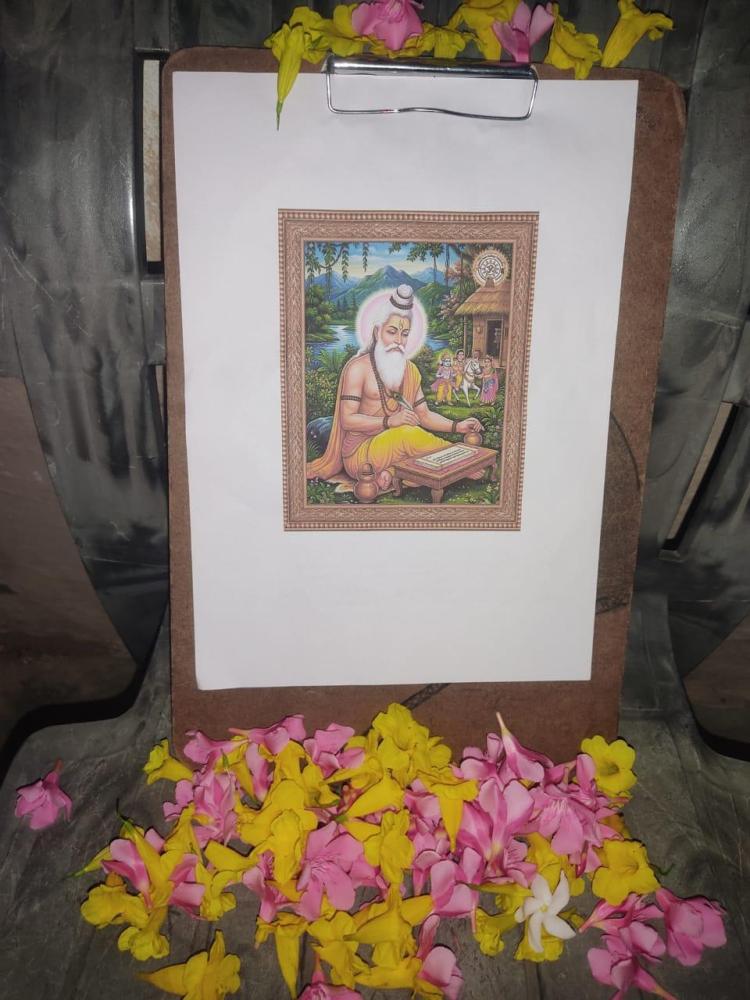
Prakasarao V Velagapudi, PhD President, Global Hindu Heritage Foundation. “The Sadguru makes a study of the mind of 'His' disciple and comes to know the nature of his thoughts.  'He' allows 'His' disciple to keep in his mind all his noble thoughts and helps him eradicate his impure thoughts by transmitting necessary energy to him to do intense Sadhana (Spiritual Practice).  Noble thoughts overcome the impure ones.  Love overcomes hatred and purity overcomes lust.” Sri Ganapathy Sachchidananda Swamiji What is Guru Purnima? In 2026, the Purnima or full moon day on July 29th is observed as the auspicious day of Guru Purnima. This day is considered sacred as we recognize the contribution of to the great sage Maharishi Veda Vyasa. He is remembered, respected and revered on this Ashada Purnima day. All Hindus are thankful, grateful and appreciative of this ancient saint who edited the four Vedas, wrote the 18 Puranas, Mahabharata, the Srimad Bhagavatam and Brahma Sutras. Vyasa even taught Dattatreya, who is regarded as the Guru of Gurus. Veda Vyasa is also called as “Krishna Dwaipayana,’ “Vasishta Krishna”, “Badarayana”, “Satyavathi Sutha” and “Parashara putra.” He was called as Krishna Dwaipayana.  When he was born, Veda Vyasa’s complexion was dark and therefore he was referred as Krishna. Since he was born on one of the islands (Dweepas) of Yamuna River, he was referred as Dwaipayana. Hence, he is known as Krishna Dwaipayana. He is known as Badarayana since the island where he was born was covered with Badara (Indian jujube) trees. Because of his unsurpassing effort to compile the Vedas into four – Rig, Yajur, Sama and Atharvanaveda, he is referred as Veda Vyasa. It is said in Srimad Bhagvatam (1.3.21), “Thereafter, in the seventeenth incarnation of Godhead, Sri Vyasadeva appeared in the womb of Satyavati through Parashara Muni, and he divided the one Veda into several branches and sub-branches, seeing that the people in general were less intelligent.”  His contribution is acknowledged in many scriptures. Gita Dhyana recognized his role to our cultural heritage: “Salutations unto thee, O Vyasa, whose intellect is vast, whose eyes are as large as the petals of a full-blown lotus, by whom was lighted the lamp of wisdom, full of the Mahabharata oil (essence).” Significance of Guru Purnima On this day, all spiritual aspirants and devotees worship Vyasa in honor of his divine personage and all disciples perform a 'puja' for their respective spiritual preceptor or Gurus. Hence, as per the tradition, we are participating in the worship of our Sadguru Sri Ganapathi Sachchidananda Swamiji’s holy feet, remembering the Guru Parampara starting with Lord Dattatreya, Dakshinamurthy, Jayalakshmi Mata and Sri Swamiji. We are all fortunate to participate in Guru Purnima celebrations of Sri Ganapathi Sachchidananda Swamiji and witness the pratyaksha Pada puja, listen to the chanting of the Ashtoattara Nama, and have darshan of His illumination ang magnetic personality. Since Hindus attach so much importance for the self-development, self -improvement and self-realization, spiritual Gurus play a dominant role in shaping and channeling the devotees to the path of spirituality. In fact, Gurus are often equated with God and always described as a link between the mortal individual and the Immortal God.  In some cases, the Gurus are placed at even higher level than Gods.  The day of Guru Purnima is the day when all express our gratitude to our Sadguru, Sri Swamiji, recommit our faith, rededicate our commitment to progress spiritually, do our part of seva, and receive his blessings. Guru Purnima is also considered an especially beneficial day to practice yogic sadhana and meditation. The next six months following Guru Purnima in Ashada masa are considered the best time to study, evolve and experience the innate divine quality in a human being.  These months are considered more suitable to receive the cosmic energy. During these celebrations, let us remember the most important verse in Guru Gita: Dhyaana moolam guror murtih; Pooja moolam guror padam; Mantra moolam guror vakyam; Moksha moolam guror kripa. "The Guru's form should be meditated upon; the feet of the Guru should be worshipped; his words are to be treated as a sacred Mantra; his Grace ensures final liberation". It is a known fact that many Indians believe that the Guru is the only guarantee for the individual to transcend the bondage of sorrow and death and experience the Consciousness of the Reality. Celebrate the Glory of a Guru     The concept of Guru is one of the pillars of Sanatana Dharma that preserved and protected the very essence of human existence. The Sanskrit root "Gu" means darkness or ignorance, "Ru" denotes removal or dispelling darkness. Therefore, one who removes our ignorance is considered a Guru. A Sadguru is the one who teaches the TRUTH to dispel darkness. Truth hurts. Truth may be harsh and painful. But we devotees of Sri Swamiji know that we get the complete knowledge, it is not tainted to be palatable. Hence Sri Swamiji’s speeches may contain harsh words, but we learn that the road to liberation is covered with many thorns. We have to take full responsibility to burn our karmas. If we take one step toward him, he will take nine steps toward us. That is Sri Swamiji. That is our Sadguru.      A spiritual aspirant can never attain valuable knowledge by his own endeavor without approaching a Guru, no matter how intelligent he may be. Jadbharat revealed this message in Srimad Bhagavatam to king Rahugan:  "O Rahugan! One cannot attain knowledge of Atma and Paramatma by performing penance, sacrifices, renunciation, Vedic study or worshipping deities of water, fire or the sun. But when the dust from the feet of a Satpurush (God-realized Guru) sprinkles on our heads, then we can surely attain this knowledge."     Being a self-realized soul, Sri Swamiji can delve deep into the relevant scriptures and pull out the most appropriate subject, throw light on the profound meanings of the human existence. Mundaka Upanishad calls such a Guru "Shrotriya" - knower of the true meanings of the scriptures. Adi Shankaracharya forbids an aspirant in endeavoring to decipher the meanings without a Guru. In his commentary on a Mantra of the Mundaka Upanishad, he says: "Even if one possesses knowledge of the scriptures, he should not attempt to delve into their meanings by himself. He should obtain the knowledge of Brahman only through the Guru."     According to Adi Shankara, two most important qualifications of a guru are Shrotriya, meaning well versed in scriptures and Brahmanishta meaning focused on Brahma. The combination of these two qualifications enable a guru to guide his disciples, clear their doubts even without explanation, infuse confidence and conviction, and provide much needed shield for the devotees. Adi Shankara explains more vividly the nature of Guru as thus:                   “The teacher is one who is endowed with the power of furnishing arguments pro and con, of understanding questions and remembering them, who possesses tranquility, self-control, compassion and a desire to help others, who is versed in the scriptures and unattached to enjoyment both seen and unseen, who has renounced the means to all kinds of actions, is a knower of brahman, and established in brahman, is never a transgressor of the rules of conduct, who is devoid of shortcomings such as ostentation, pride, deceit, cunning, fraud, jealousy, falsehood, egoism and attachment. He has the sole aim of helping others and a desire to impart the knowledge of brahman only.” (Upadesa Sahasri of Sri Sankaracharya: A Thousand Teachings in Two Parts: Prose and Poetry; translated by Swami Jagadananda).  Worship Padas - feet     As we all know that today’s Guru Purnima program starts with Pratyaksha Pada Puja – doing the puja to the feet of our Sadguru. Why do we do puja to Padas (feet)?   Manduka Upanishad says: "The Guru's feet are like the foundation on which a building stands.... The Guru's feet are the two elements in the mantra So'Ham which means 'I am that.” According to Sant Jnaneswar, Guru’s feet will enable one to attain all the purusharadhas: May I be worthy of the Guru’s feet; through them I may attain all the goals of human life, and through them I will gain that pure knowledge that leads to rest in God.” As we all know that on this day, the devotees perform pada puja by washing his feet or his padukas, smearing them with gandham (sandalwood paste) and chanting ashtottaranama by offering flowers followed by abharana seva. Finally, all the devotees get the opportunity to offer guru Dakshina.  Full faith is paramount in receiving the bounty of blessings. Sant Tukaram says:     If you have faith in the Guru’s feet,     If you have deep feeling for Guru’s feet, If you imbibe the state of the Guru, Then you don’t have to look for God. God will come looking for you. Guru Purnima is the day when all His devotees and disciples honor, respect and eulogize Sadguru Sri Ganapathy Sachchidananda Swamiji. In addition to having Sri Swamiji’s darshan, we should participate in all pujas and perform Pada Puja to symbolize the glory of our Sadguru. God manifests through Him.  Let us remember his guidance and speeches that extol the virtues of dharma; reflect on the miracles bestowed on countless devotees; reminisce his love, compassion, dynamism and magnetism; recollect as to how he is transforming his devotees to be spiritual; and recall his tireless efforts to rekindle the light of knowledge. Remember that Gods manifest as Gurus. Sri Swamiji is Datta Avatara who travels across the globe to guide all his devotees who have been associated with him in his previous numerous Avataras. Jai Guru Datta.
29 Jul 2026

[GHHF] Assam Hindu Advocates Forum gets assurance from Chief Minister - Bangladesh Hindus will get Indian Citizenship and enjoy all rights as Indian nationals.

Global Hindu Heritage Foundation is extremely happy to inform that our Hindu Advocates Forum in Assam has been actively involved in trying to allay the fears of Bangladesh Hindus who are fearful of being sent back to Bangladesh. GHHF is approaching as many Bangladesh Hindus as possible and trying to convince them to apply for citizenship instead of living in fear.  As many of you are aware, GHHF, under the leadership of Samrat Dutt, formed the Assam Hindu Advocates Forum to help any Hindu who is being exploited by Christians and Muslims. Advocates Forum helped many girls who were involved in Love Jihad. We rescued several of them from the Love Jihad trap.  On 20.5.26, we sent a letter to the CMO seeking an appointment to meet Honorable Himanta Biswa Sarma, and in reply, they told us that they would let us know about the dates for the meeting. GHHF thanks Advocates Ratnagkoor Bhattacharjee, Dhrub Shah, Nargis Bhowmik and Samrat Dutta for taking the lead and requesting the Chief Minister for an appointment. On 15.6.26, we sent a memorandum through the Chief Secretary, Assam, and yesterday the CM, through a press meet, categorically said that there are no Bengali Hindus in the state's detention centers, stating he would resign if even one case is found. He further emphasized that no further police warrant will be issued against any Hindus. Moreover, after the final NRC, they will be able to register their name under CAA. Assam Chief Minister Himanta Biswa Sarma organized a press meet Yesterday and categorically spoke about Bengali Hindus who came from Bangladesh.  Moreover, he also told the public that, to counter the cross-border illegal Muslim immigration, monthly scrutiny will be started. Memorandum, letter, and newspaper have been shared with you for your ready reference. Donations appreciated:  PayPal Method: Savetemples.org By Zelle: ghhfusaorg@gmail.com By Check: GHHF, 14726 Harmony Lane, Frisco, TX 75035. Phone: 601-918-7111; +91 83096 43979 Email: ghhfusaorg@gmail.com {{album_1642}}
28 Jul 2026

[GHHF] Paula Brunton’s remarkable experience of meeting Sri Ramana Maharshi and his incredible journey into spirituality.

Paul Brunton was a British philosopher, mystic, traveler, and guru. He left a journalistic career to live among yogis, mystics, and holy men and to study Eastern and Western esoteric teachings. Dedicating his life to an inward and spiritual quest, Brunton felt charged to communicate his experiences about what he had learned in the East to others. He met several spiritual leaders, including Meher Baba, Sri Shankaracharya of Kancheepuram, and Ramana Maharshi.  He was credited with introducing Ramana Maharshi to the Western world through his books "A Search in Secret India" and "The Secret Path". We will present his amazing and extraordinary experience of meeting Sri Ramana Maharshi: “I fold a thin cotton blanket upon the floor and sit down, gazing expectantly at the silent figure in such a rigid attitude upon the couch... If he is aware of my presence, he betrays no hint, gives no sign.  His body is supernaturally quiet, as steady as a statue.  Not once does he catch my gaze, for his eyes continue to look into remote space, and infinitely remote it seems.” I find myself outside the rim of world consciousness. The planet which has so far harboured me disappears. I am in the midst of an ocean of blazing light. The latter, I feel rather than think, is the primeval stuff out of which worlds are created, the first state of matter. It stretches away into untellable infinite space, incredibly alive. His eyes shine with astonishing brilliance. Strange sensation begins to arise in me. Those lustrous orbs seem to be peering into the inmost recesses of my soul. In a peculiar way, I feel aware of everything he can see in my heart. His mysterious glance penetrates my thoughts, my emotions and my desires; I am helpless before it. “I write for those who have felt the truth in intuitive flashes as well as for those who must be argued into it by intellectual reasonings.” (Notebooks of Paul Brunton 12.5.1) In the presence of the Maharshi one felt security and inward peace. The spiritual radiations that emanated from him were all penetrating. I learnt to recognise in his person the sublime truths which he taught, while I was no less hushed into reverence by his incredibly sainted atmosphere. He possessed a deific personality which defies description. I might have taken shorthand notes of the discourse of the Sage, I might even print the record of his speech; but the most important part of his utterances, the subtle and silent flavour of spirituality which emanated from him, can never be reported. One could not forget that wonderful pregnant smile of his, with its hint of wisdom and peace won from suffering and experience. He was the most understanding man I have ever known; you could be sure always of some word from him that would smooth your way a little, and that word always verified what your deepest feeling told you already. The words of the Maharshi flame out in my memory like beacon lights. “I pluck golden fruits from rare meetings with wise men”, wrote trans-Atlantic Emerson in his diary, and it is certain that I plucked whole basketfuls during my talks with this man. Our best philosophers of Europe could not hold a candle to him. “I am alone with the Maharishee!  Never before has this happened.  His eyes begin to change; they narrow down to pin-points.  The effect is curiously like the “stopping-down” in the focus of a camera lens.  There comes a tremendous increase in the intense gleam which shines between the lids, now almost closed.  Suddenly, my body seems to disappear, and we are both out in space!” “There is something in this man which holds my attention as steel filings are held by a magnet. I cannot turn my gaze away from him. I become aware of a silent, resistless change, which is taking place within my mind. One by one, the questions which I prepared with such meticulous accuracy drop away. I know only that a steady river of quietness seems to be flowing near me; that a great peace is penetrating the inner reaches of my being, and that my thought-tortured brain is beginning to arrive at some rest. I perceive with sudden clarity that intellect creates its own problems and then makes itself miserable trying to solve them. This is indeed a novel concept to enter the mind of one who has hitherto placed such high value upon intellect.” “I surrender myself to the steadily deepening sense of restfulness. The passage of time now provokes no irritation, because the chains of mind-made problems are being broken and thrown away. And then, little by little, a question takes the field of consciousness. Does this man, the Maharshi, emanate the perfume of spiritual peace as the flower emanates fragrance from its petals? I begin to wonder whether by some radioactivity of the soul, some unknown telepathic process, the stillness which invades the troubled water of my soul really comes from him. The peace overwhelms me.” “The Maharshi turns and looks down into my face; I, in turn, gaze expectantly up at him. I become aware of a mysterious change taking place with great rapidity in my heart and mind. The old motives which have lured me on begin to desert me. The urgent desires which have sent my feet hither and thither vanish with incredible swiftness. The dislikes, misunderstandings, coldness and selfishness which have marked my dealings with many of my fellows collapse into the abyss of nothingness. An untellable peace falls upon me, and I know that there is nothing further that I shall ask from life.  If you are interested in knowing more about his amazing experiences, please read these two books: "A Search in Secret India" and "The Secret Path". Visit our website for all our activities posted every day,       www.savetemples.org
27 Jul 2026

[GHHF] Bala Samskar Students celebrated ‘Kargil Vijay Diwas Day’ to remember the great sacrifice of the 527 brave soldiers to protect Bharat.

To the north of India, in the Himalayan mountain ranges, lies a region called Kargil. It is a land of extremely cold, high mountains, and snow-capped peaks. During winter, due to heavy snowfall, our soldiers usually vacate some of the highest border posts and reoccupy them once the weather clears. When India gained independence in 1947, the country was divided into India and Pakistan. Since then, Pakistan has consistently attempted to create instability along our borders, driven by persistent hostility toward India. The Challenge of 1999 In the summer of 1999, India faced an unexpected challenge. Exploiting the vacancy of these border posts, Pakistani soldiers and militants infiltrated our territory and secretly occupied key strategic heights in Kargil. When the Indian government and the Army realized the gravity of the situation, the entire nation was shocked. If an enemy occupies a country's borders, it threatens its honor, sovereignty, and the safety of its citizens. Without security, there can be no peace, development, or future. Therefore, the Indian Army decided to repel this intrusion immediately. Operation Vijay: A Heroic Struggle The Army launched "Operation Vijay" to drive the intruders out. The battle was immensely difficult; the Kargil mountains were extremely high, and the enemy held the advantage of altitude. Despite freezing temperatures, snowstorms, and a lack of oxygen, our soldiers fought with unparalleled bravery. They knew this was not just about a mountain; it was about the honor of our Motherland and the safety of our people. Our soldiers displayed legendary courage. Young officers and jawans fought day and night to recapture vital peaks like Dras, Tololing, and Tiger Hill. In this heroic struggle, 527 brave Indian soldiers made the supreme sacrifice for their country. Their sacrifice is beyond measure. The Victory On July 26, 1999, the Indian Army officially declared victory in the Kargil War. India had won! This victory stands as a testament to the relentless spirit, courage, and selfless love our soldiers have for the nation. Every year on July 26, we celebrate "Kargil Vijay Diwas" to honor our martyrs, pay our respects, and express our gratitude to those who stand as a shield for our country. Key Message Kargil Vijay Diwas reminds us of the courage, sacrifice, and dedication of the Indian Armed Forces. We live in safety because of their sacrifices. It is our duty to respect them and remember their service. This day teaches us patriotism and the importance of standing united during difficult times. It reminds us that we must always remain vigilant to protect our sovereignty and the safety of our people. Teacher's Tasks Discussion: When and where did the Kargil war happen, and what was the reason? Ans: In 1999, in the Kargil district of Ladakh, because Pakistani infiltrators secretly occupied our border peaks. How did India and Pakistan separate, and why does Pakistan create instability? Ans: They separated in 1947; Pakistan often creates instability due to its persistent hostility and expansionist intent toward India. What are the consequences if enemies occupy a nation’s borders? Ans: It threatens national sovereignty, endangers citizens, disrupts peace, and hampers economic development. What hardships did our soldiers face, and how many made the supreme sacrifice? Ans: They faced extreme cold, high altitude, oxygen deficiency, and brutal enemy fire. 527 soldiers were martyred. Why do we celebrate Kargil Vijay Diwas? Ans: To honor our brave martyrs, celebrate our victory, and reaffirm our gratitude to the armed forces. Practical Tasks: ●    "Salute to the Soldiers": Encourage students to draw a picture or write a short message of gratitude to our soldiers. ●    "For Our Nation": Discuss small ways students can serve the country, such as respecting national symbols, participating in national festivals, preserving our culture, and being responsible citizens. Donations appreciated:  PayPal Method: Savetemples.org By Zelle: ghhfusaorg@gmail.com By Check: GHHF, 14726 Harmony Lane, Frisco, TX 75035. Phone: 601-918-7111; +91 83096 43979 Email: ghhfusaorg@gmail.com  {{album_1641}}
26 Jul 2026

[GHHF] In Bangladesh, performed Gharwapsi for 19 people and started five Bala Samskar Kendras. Please support our BRAVE activists.

As many of you are aware, Global Hindu Heritage Foundation started Bala Samskar Kendras in Bangladesh in 2022. We operated 6 schools with as many as 60 students in each class. Also, we performed Ghar Wapasi. Then, we also supported the celebration of several festivals and annadanam.  You can read any 50 posts we published on our website over the last four years.  We paused publishing our activities for several months because of the political turmoil. Global Hindu Heritage Foundation (GHHF) has undertaken several initiatives in Bangladesh: •   Bala Samskar / Sanskar Kendras (Youth Centers). •   Organized and started multiple centers (including an initial rollout of three centers growing to ten) with over 100 students. •   Programs focus on teaching students Vedic Slokas, Bhagavad Gita verses, and the chanting of Vedas. •   Cultural & Religious Celebrations. •   Celebrated Durga Puja, which included distributing clothes and food to impoverished Hindu families. •   Organized extensive Sri Krishna Janmashtami celebrations lasting more than ten hours. •   Community Awareness Education: •    Educating students and community members within their Kendras about historical and local events, such as the killings of Hindus in the Noakhali region and the fatwa issued against Taslima Nasrin. Global Hindu Heritage Foundation members of Bangladesh never stopped working even after losing some members. Some Hindus who were lured into Christianity by giving ration, etc., now realized the real color, and all 64 Christian families in a village agreed to come back to Sanatan Dharma. But during the last minute, some were warned and threatened; finally, 19 families came back to Hinduism, well prepared to face consequences.     Unfortunately, during the program, a mob including Christians and Muslims attacked our people, and some were severely injured. It is very much appreciated that local Hindus and Gharwapsi Hindus, with support from the GHHF team, fought back and resisted. It was a huge effort, going door to door amid riots, violence, heavy rains, floods, and landslides, explaining our dharma and bringing it to them. It is a heavy risk to life there, beyond the effort, organizing, and funding. Donations appreciated:  PayPal Method: Savetemples.org By Zelle: ghhfusaorg@gmail.com By Check: GHHF, 14726 Harmony Lane, Frisco, TX 75035. Phone: 601-918-7111; +91 83096 43979 Email: ghhfusaorg@gmail.com {{album_1640}}
25 Jul 2026